Why Rising Steel Prices Matter to the Industrial Sector
Decision-making in a changing cost environment is tricky for manufacturers considering expansions, modernizations, or new facilities, as well as for construction partners responsible for turning those investments into operating assets. Steel prices are a key operating and capital-cost factor for the industrial sector, so recent volatility has made planning, procurement, and execution more challenging.
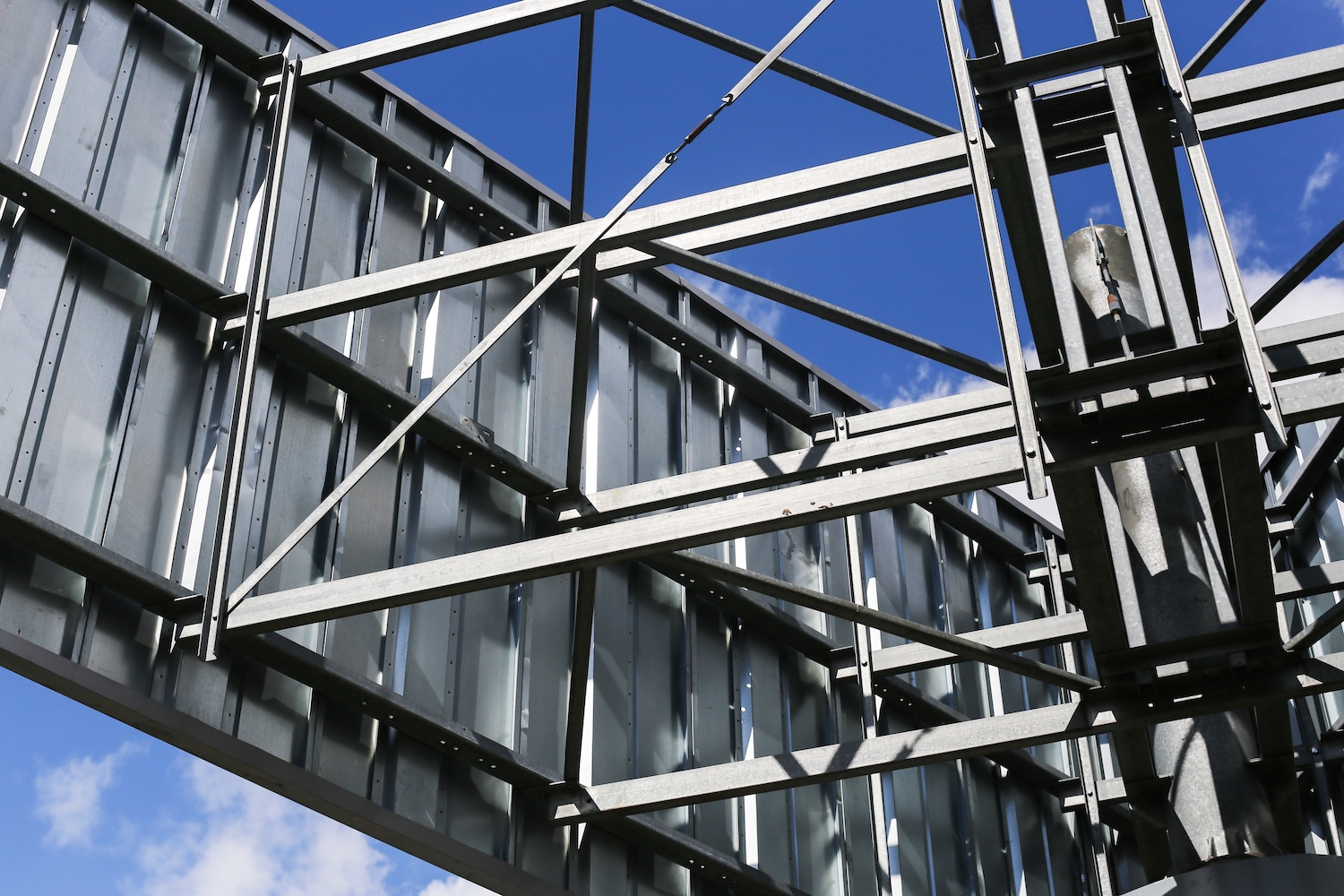
When steel pricing moves higher at the same time that project teams are dealing with tariff uncertainty, labor constraints, and broader inflation across materials, the challenge is not just a higher line item. Higher steel prices can change how industrial owners evaluate budgets, timing, procurement, and project risk.
Which Steel Price Trends Are Driving Rising Construction Costs
Market pricing for domestically produced hot-rolled coil steel rose above $1,000 per ton in 2026, putting steel back into an alarming cost range for some industrial buyers. Recent steel price movement has become a planning concern for industrial companies because steel costs flow into capital budgets, project feasibility, procurement strategy, and margins across steel-intensive sectors, many of which are critical to the economy.
When steel pricing fluctuates and labor and other materials are costlier or harder to secure, owners and contractors face uncertainty around bids, schedules, and project viability. Higher steel prices don’t determine every project outcome, but they can change the assumptions that underpin budgets, schedules, procurement plans, and investment decisions.
How Steel & Aluminum Tariffs Are Affecting Material Prices
The industrial sector has already lived through major steel disruptions this decade. Pandemic-era supply chain breakdowns and the market shock that followed Russia’s invasion of Ukraine each contributed to earlier price hikes. The current steel price fluctuations, however, are happening in a different landscape.
Steel pricing exists within a global steel market shaped by major producers, trade flows, and policy shifts. Tariffs directly influence material pricing by raising the cost of imported steel and aluminum. Indirectly, tariffs shape sourcing decisions, buyer expectations, and domestic pricing behavior. For industrial buyers, the concern is today’s price as well as what supply options and price levels may look like next quarter.
Recent data shows steel pricing in 2025 and 2026 has been impacted by tariffs and trade policy. In 2025, the U.S. tightened its Section 232 steel tariff regime by reducing exemptions, narrowing exclusions, expanding coverage to more derivative products, and then raising the tariff rate to 50% in June for most countries. That higher-tariff regime has remained in place in 2026. Steel imports decreased in 2025, while U.S. crude steel production increased 3.1%. China and India remained the world’s largest steel producers in 2025, followed by the United States.
Regional market conditions can influence industrial material costs, even when they do not originate in the U.S. steel market. Energy prices, shipping routes, regional construction demand, and metal supply conditions in major industrial regions such as the Middle East can affect freight costs, aluminum prices, and buyer expectations—all of which we see playing out in real time and at great cost with the conflict between the U.S. and Iran.
The Impact of Rising Steel Prices, Labor Shortages, & Broader Inflation on Construction Costs
On the construction side, higher steel prices can affect structures, support systems, mezzanines, equipment platforms, and other steel-intensive scopes. For manufacturers, steel prices can affect the cost of facility upgrades, new capacity, process improvements, machinery, and fabricated components before construction even begins.
The Federal Reserve’s April 2026 Beige Book said manufacturers reported rising costs stemming from tariffs on steel and aluminum, while also facing higher fuel-related shipping expenses. Higher steel and aluminum costs become harder to manage when labor is tight and freight costs are elevated.
Labor cost adds another layer of pressure because higher material costs are harder to absorb when qualified workers are also difficult to secure. For industrial construction teams, labor availability affects not only wage pressure, but also schedule certainty, subcontractor pricing, commissioning timelines, and the ability to keep work moving when scopes change. In its 2026 Construction Hiring and Business Outlook, the Associated General Contractors of America (AGC) reported that 82% of firms had difficulty filling qualified hourly craft positions, and 80% had difficulty filling salaried openings.
Broader inflation adds upward pressure beyond steel. Higher costs of fuel, freight, utilities, labor, equipment, insurance, and contracted services can all influence industrial project budgets. In March 2026, the U.S. Consumer Price Index rose 3.3% over the last 12 months, while the energy index increased by 12.5% according to the Bureau of Labor Statistics. For industrial projects, those pressures can compound material-price increases, flow into supplier pricing and contractor bids, and increase budget risk.
Rising steel prices have a broader impact than just the price of beams, plate, or fabricated components alone. When building materials, energy, freight, and labor are all under pressure, industrial owners and construction teams have less room for late design changes, procurement delays, or budget assumptions that are not tied to current market conditions.
How Construction Project Planning Can Protect Profit Margins
When costs are uncertain, waiting is one option, but it is not always the most strategic one. Delaying a project can mean delaying new production capacity, efficiency gains, modernization goals, or revenue tied to expansion. Steel price volatility has not stopped industrial projects from moving forward. Manufacturing construction has slowed, but it has not stopped. U.S. Census Bureau data put manufacturing construction spending at a seasonally adjusted annual rate of $196.2 billion in January 2026, down 15.0% from January 2025. Even with the decrease, there is still a substantial volume of manufacturing construction in a changing cost environment.
For manufacturers moving forward with investment, the priority becomes improving certainty where possible. External market volatility cannot be eliminated, but teams can reduce avoidable uncertainty by aligning design, pricing, procurement, and construction planning earlier. That coordination gives owners better visibility into cost drivers and tradeoffs. Early alignment allows procurement and scope decisions to reflect current market conditions before surprises emerge.
In a market where some inputs remain unsettled, reducing disconnects between design intent and field execution can help protect margin and schedule. Design-build can shorten feedback loops, improve coordination, and help teams respond faster when pricing or supply conditions change. Early alignment becomes more valuable when costs are shifting. For industrial projects, a disciplined project approach can be the difference between absorbing market pressure strategically and reacting to it late.
How Industrial Companies Are Minimizing Uncertainty to Move Projects Forward
Rising steel prices matter because they affect manufacturing economics and construction delivery. Tariffs, global production patterns, lower imports, labor shortages, and broader inflation all shape the current environment of the construction industry. None of that means industrial companies should stop investing, but it does mean that project planning deserves more attention. Companies that move forward successfully in this kind of market are not the ones waiting for perfect conditions. They are the ones reducing uncertainty in design, procurement, and execution decisions.
- Category:
- Industry
Some opinions expressed in this article may be those of a contributing author and not necessarily Gray.
Related News & Insights
Commercial, Construction
Steel Tariffs: The Impact on the U.S. Economy
Industry, Opinion
June 13, 2018Commercial, Construction
Will U.S. Steel and Aluminum Tariffs Damage Trade Relationships and the U.S. Economy?
Industry, Opinion
Manufacturing
Reverse, Revive, & Reshape: What Trump's Economic & Trade Policies Mean for Key U.S. Industries
Industry, Opinion