Shining a Light on the Lack of Fully Automated "Dark Factories"
For decades, we’ve been hearing about robots taking jobs and the boundless potential of fully automated facilities—potential that has yet to be realized en masse. An IBM “lights-out” keyboard assembly factory was operating as far back as 2003 but closed because its robots were too inflexible to manage variations in the product line. Nearly 25 years later, North America still hasn’t been transformed by fully lights-out manufacturing. Even amid persistent labor shortages and a sustained push for remote work spurred by the COVID-19 pandemic, truly dark factories remain rare. Lights-out manufacturing is finally being realized in a few highly automated locations around the world, but most utilize only partial automation with skilled workers still overseeing production shifts.
Why is a fully autonomous “dark” factory so elusive? In this article, we’ll examine contributing factors to the gap between theory and practical implementation, along with recent trends that have inched the industry closer to lights-out.
What Is a Dark Factory?
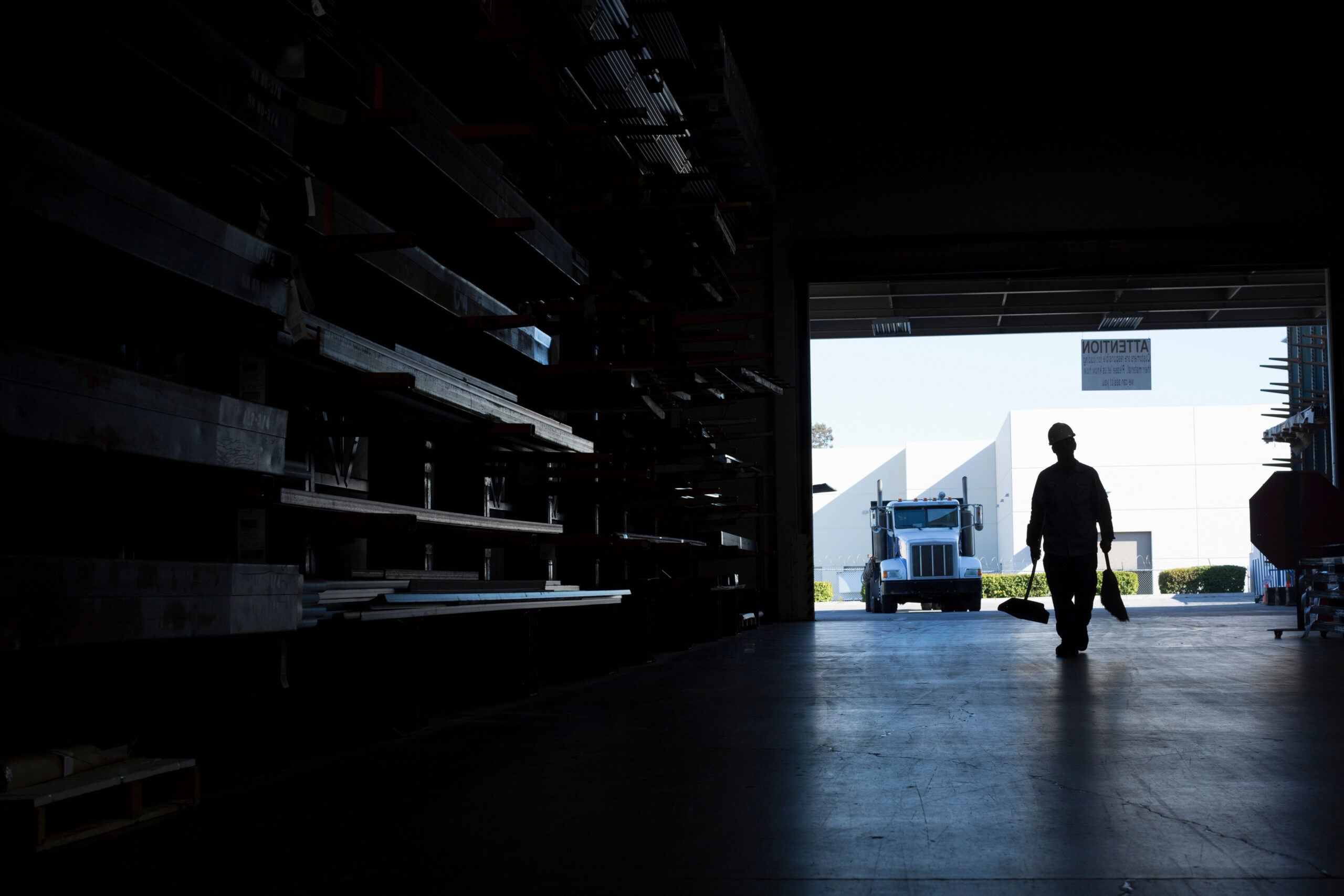
The “dark factory” represents the peak of industrial automation. It’s named for the idea that operations can run without any human presence—machines don’t need lights, so a fully automated plant could theoretically operate in the dark. Such a facility also forgoes many traditional design elements aimed at human safety or comfort. In essence, a dark factory is the ultimate objective of automation: a factory run by robots and computerized systems with little to no human intervention.
Real-world examples of lights-out facilities do exist, though they are exceptions, not the rule. One famous case is a FANUC manufacturing plant in Japan that can run for nearly a month building industrial robots with minimal human input. In the Netherlands, Philips operates a razor production factory run by over 120 robots, with fewer than 10 human workers on-site for quality assurance. Even some U.S. companies are experimenting on a smaller scale—one Arizona startup offers a lights-out 3D printing service using collaborative robots to produce parts on demand. These pioneers show what’s technologically possible when automation is pushed to its limits.
Click here to read about Hill’s Pet Nutrition’s highly automated wet pet food manufacturing facility—designed, built, and automated by Gray and Gray AES.

What Are the Potential Benefits of a Dark Facility?
A fully automated manufacturing or distribution facility offers multiple potential advantages:
- Overcoming labor shortages—By using automated systems to perform the dull, dirty, and dangerous jobs that are less attractive to human workers, manufacturers can meet production targets without worrying about chronic labor shortages, high turnover, or rising wage expenses. Automation can also enable companies to operate in regions with limited labor availability.
- Increasing productivity—Industrial robots and machines can run at faster speeds and for longer periods without breaks. Around-the-clock operation with no need for shift changes means output can increase dramatically, all without concerns about fatigue or human error.
- Improving quality—Automated processes offer a high degree of consistency and precision compared to manual operations. Robots can perform repetitive tasks exactly the same way every time, reducing variability and defects. This consistency in production translates to a higher overall quality of goods.
- Satisfying end-customers—Faster production cycles and higher order fulfillment accuracy are direct benefits of automation, but the indirect benefits are equally great. Customers who receive their products more quickly and with fewer errors are more likely to feel loyalty to the brand and offer positive reviews. Moreover, fully automated manufacturing offers a way to boost productivity without overexerting or exploiting human workers—an increasingly important point for socially conscious consumers.
- Bolstering reshoring and resilience—Advanced automation can make domestic manufacturing more cost-competitive, allowing companies to localize production and rely less on offshore factories. This strengthens supply chain resilience by reducing dependency on distant labor markets. In fact, automation is viewed as a key enabler for “reshoring” production back to high-wage countries—a consistent priority across U.S. administrations for more than 10 years.
- Permanent energy savings—Without the need to maintain bright lighting or comfortable climate conditions for human workers, facilities can save significantly on energy costs. Lights-out factories only need to power the equipment itself and systems that maintain product quality (for example, certain process-specific climate controls), leading to lower utility expenses from the facility’s first day to its last.
- Reducing facility design costs—This is perhaps the dark factory’s biggest architectural advantage. If a facility is designed from the outset to be lights-out, many human-centered spaces and systems can be downsized or eliminated. Areas such as break rooms, cafeterias, restrooms, parking lots, extensive HVAC systems, and even some safety infrastructure can be scaled back. This reduces material costs, shortens construction timelines, and lowers long-term maintenance costs.
High-volume, repetitive processes and operations that would pose safety risks for humans are excellent candidates for full automation. It’s no surprise that sectors like electronics manufacturing, automotive components, semiconductors, and pharmaceuticals have been early adopters of lights-out techniques for specific process steps.
What Technology Makes Dark Factories Possible?

More than anything, running a dark factory depends on technologies that can perform reliably with minimal human intervention. Achieving this capability requires a robust digital infrastructure—standardized processes, integrated control systems, and high-speed connectivity (such as 5G networks) to link equipment with cloud analytics. Depending on the needs of a given facility, a combination of advanced systems is typically used:
- Advanced automation systems—These include sophisticated material handling and inspection technologies. For example, machine vision systems can automatically inspect product quality, and autonomous guided vehicles or mobile robots (AGVs/AMRs) use sensors and navigation software to transport materials throughout the facility without human drivers.
- Specialized robotics—Autonomous robotic arms equipped with customized end-of-arm tooling can execute a variety of tasks, from picking and placing items on a conveyor to precision assembly or welding operations. Modern robots are more adaptable than ever, and some are designed as “cobots” to safely work alongside humans.
- Industrial Internet of Things (IoT)—Networks of sensors and smart devices monitor key parameters such as temperature, humidity, machine performance, and inventory levels in real time. These IoT devices feed data into centralized systems (often via cloud platforms), which is vital for quality assurance and for coordinating the many moving parts of an automated operation.
- Artificial intelligence (AI) and analytics—AI-driven software is crucial for managing the complexity of a dark factory. One major application is predictive maintenance: AI algorithms analyze sensor data to predict equipment failures before they happen, scheduling upkeep to minimize unplanned downtime. AI and machine learning also enable autonomous decision-making and adaptive optimizations—adjusting workflows on the fly as conditions change—to keep the factory running smoothly.
These technologies are most effective when they operate in unison rather than isolation. Industry leaders such as Gray and Gray AES have developed robust partnerships with key automation integrators to promote a “Connected Enterprise” approach, incorporating robotics, control systems, and data analytics into one cohesive IT/OT ecosystem. In practice, this means the factory’s robots, conveyors, sensors, and software continuously communicate and coordinate, leveraging cross-stream data to optimize productivity and efficiency.

What Challenges Do Dark Factories Pose?
Despite the theoretical benefits of lights-out factories, several practical challenges have kept most companies from fully embracing the dark factory model:
Full Automation Is Complex (and Costly)
Keeping production running smoothly without humans requires extremely detailed system integration and programming up front, as well as rigorous maintenance procedures on the back end. Specialized human expertise is needed to design and implement advanced automation and keep it running optimally. However, the industry faces a shortage of tech-savvy workers with these skills. Nearly a decade ago, analysts warned that the U.S. could lose out on roughly $162 billion in annual revenues if it fails to close the high-tech talent gap. Little has changed, as the Manufacturing Institute’s 2025 State of the Manufacturing Workforce Address predicted a shortfall of 1.9 million manufacturing workers by 2033 if current trends hold. Beyond labor challenges, implementing automation at this scale carries significant upfront costs. “Budget constraints, organizational understanding, process continuity, and (perhaps most importantly) leadership buy-in all play critical roles in adoption… achieving that often takes significant time and resources,” says Stephanie Scearce, vice president of workforce innovation at the Georgia Association of Manufacturers.
Automation Isn’t Suited to All Processes
Even the most advanced robots today lack the general-purpose adaptability of humans. “There isn’t one single robot that’s so intelligent and so versatile that it’s like a human worker,” observes Matthew Johnson-Roberson, director of Carnegie Mellon University’s Robotics Institute, underscoring that non-standard situations still require human logic and intervention. Analysts note that the dream of a fully networked system of dark warehouses won’t be realized until far higher levels of human-like reasoning and flexibility can be programmed into machines. In other words, many complex judgment calls that human workers handle every day remain outside the reach of today’s AI. Certain physical tasks are also still challenging for automation. For example, while robots have proven adept at transporting goods from point A to point B, they are far less capable when it comes to delicately picking up and precisely placing a wide variety of individual items. This problem has been somewhat offset by the emergence of more specialized robotic arms, such as those with articulated fingers, soft pneumatic grippers, and quick-change end-of-arm tooling, but these solutions are not yet broadly applicable. This limitation—identified years ago by industry CIOs—highlights the gap between what current robotics can do and the full range of activities in a busy factory or distribution center.

Hybrid Automation May Offer the Best of Both Worlds
For many companies, jumping straight to a fully “dark” facility is too great of a leap. A hybrid approach to automation—where robots and automated systems work alongside humans—can still yield most of the benefits without the extreme complexity. Amazon is an excellent example of a company that has embraced extensive automation in its fulfillment centers without going fully lights-out. In fact, most U.S. manufacturers are pursuing incremental automation upgrades in existing plants rather than building brand-new dark factories from the ground up. This pragmatic strategy has driven the rise of collaborative robots designed to operate in tandem with human workers. In North America, nearly a quarter of all industrial robots ordered in Q2 2025 were collaborative models— sending “a clear signal that manufacturers are building automation with people, not just instead of them,” says Alex Shikany, executive vice president of the Association for Advancing Automation (A3).
In response to Amazon’s disruptive, technology-driven business model, even traditional organizations like the U.S. Postal Service (U.S.P.S.) have rapidly increased automation to stay competitive. The U.S.P.S. has implemented a range of automated technologies to handle high-volume, repetitive tasks in mail processing, including:
- Machines using optical character recognition (OCR) technology read over 95% of hand-addressed letters and machine-printed mail.
- A fleet of 365 automated guided vehicles (AGVs) across 25 facilities—one of the world’s largest material-handling systems—moves mail within plants.
- More than 200 miles of conveyors installed throughout postal sorting centers enable the efficient flow of materials.
- The largest gantry robotic fleet in the world, with 165 robotic systems, moves 300,000 mail trays per day.

Even with this level of automation, U.S.P.S. facilities still aren’t completely lights-out. Human workers are still needed to perform tasks such as moving loaded pallets, driving forklifts, or swapping out full containers for empty ones to feed the robotic sorting systems. For the Postal Service, automation isn’t a luxury—it’s a necessity to modernize operations and remain relevant amid the explosive growth of Amazon and other logistics giants.
Dim Facilities: Long-Term Shift or Stopgap Solution?
A fully automated, dark factory may be an overly ambitious goal for most manufacturers today, but investing in greater automation is still a worthwhile endeavor. The more realistic scenario for the foreseeable future is a “dim” factory—one in which humans and automated systems work together to achieve optimal performance. By implementing automation in the areas where it can have the greatest impact on efficiency, productivity, quality, and safety, companies can reap significant benefits now while laying the groundwork for a possible dark factory in the future.
Learn more about our digital transformation, automation, and robotics services through Gray AES.
“We’re not going to see a whole shift to dark factories in the next five years,” predicts Shikany, “but hybrid models with smart automation, digital twins, and AI copilots are accelerating rapidly,” indicating that a fully lights-out future remains a longer-term prospect. Falling costs for advanced robotics and the ever-growing capabilities of AI are steadily pushing the industry closer to a lights-out vision. Each incremental step toward total automation brings manufacturing closer to the efficiency and resilience promised by the dark factory concept.
Some opinions expressed in this article may be those of a contributing author and not necessarily Gray.
Related News & Insights
Manufacturing, Automation Solutions
Exploring the Next Generation of Industrial Manufacturing Robots
Industry
March 03, 2026Manufacturing, Design
Process Makes Perfect: Driving ROI through Manufacturing Process Optimization
Industry
March 03, 2026Distribution
Distribution: Same Old Order Fulfillment or Rapidly Changing Industry?
Industry
January 02, 2026