Heat Safety Risks: High Temperatures and Heat-Related Illnesses
Summer months are a great time for enjoying the outdoors with family and friends. But it’s important to keep in mind that hot weather can be especially dangerous if proper safety precautions aren’t considered, particularly on an outdoor jobsite.
Working in hot weather and the direct sun increases the risk of heat-related illnesses in exposed workers, such as heat stress and heat exhaustion. According to OSHA, “every year, thousands of workers become sick from occupational heat exposure, and some are fatally injured.”

Heat-related illnesses and fatalities are preventable, but it’s important to identify the signs and react quickly and appropriately when they occur.
The main cause of a heat-related illness is your body’s inability to cool itself. This can result from a variety of factors, such as dehydration, insufficient airflow, or high humidity that prevents sweat from evaporating. While understanding the cause, it is also important to know that heat exhaustion is the precursor to heatstroke and is a direct result of the body overheating.
When heat exhaustion is not addressed, heat stroke can follow. To protect workers from incidents caused by high temperatures, it’s essential to be educated on the causes, signs and treatment of heat-related illnesses.
Prevent heat-related illnesses by:
- Drinking water frequently
- Wearing light-colored, light-weight, loose-fitting, breathable clothing
- Using safety glasses, sunscreen and brimmed hard hats with adequate UV protection
- Scheduling more difficult, strenuous activity for cooler times of day
- Taking frequent breaks in shaded, cooler areas
- Avoiding high-fat, heavy lunches
- Abstaining from consumption of caffeinated or alcoholic beverages
Signs and Symptoms of Heat Illness
It’s important to recognize how often you go to the restroom, as this could be a sign of heat-related illnesses. For more information on how to determine if you are dehydrated, see the infographic provided by the U.S. Army Public Health Command.
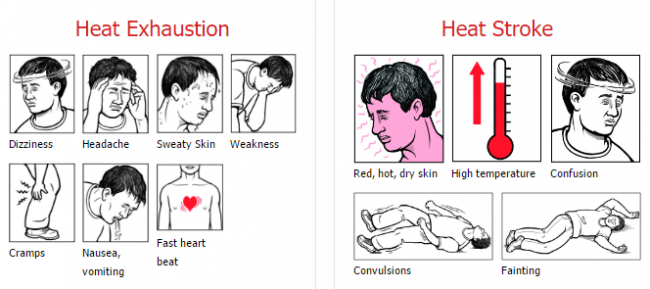
Early signs of heat exhaustion include: dizziness, headache, lethargy, muscle cramping, and nausea/vomiting.
When heat exhaustion is not properly addressed, it can progress to a medical emergency known as heat stroke. If a co-worker exhibits the following signs of heat stroke, call 911 immediately. Heat stroke symptoms include the following: red, hot, dry skin; confusion; slurred speech; convulsions; and fainting.
What can you do if a you or a co-worker is experiencing the symptoms of heat exhaustion or heat stroke?
- Relocate to a cooler location
- Lie down
- Discontinue activity
- Drink water or an electrolyte sports drink
- Mist skin with cool water
Construction workers should keep a close eye on work and weather conditions throughout the day. OSHA developed a Heat Safety Tool app that offers vital safety information at any time, any place. According to the tool, “the app allows workers and supervisors to calculate the heat index for their worksite, and, based on the heat index, displays the risk level to outdoor workers. Then, with a simple click, you can get reminders about the protective measures that should be taken at that risk level to protect workers from heat-related illness.”
OSHA also continues to enhance and expand measures to protect workers from hazards of extreme heat. Learn more here.
For more information on Gray’s commitment to putting safety and quality of life first, click here.
Some opinions expressed in this article may be those of a contributing author and not necessarily Gray.
Related News & Insights
The Heat is On: 5 Ways for Construction Workers to Keep Cool in Hot Weather
Industry
5 Ways for Construction Workers to Put Safety First This Winter
Industry
Manufacturing, Automation Solutions
Exploring the Next Generation of Industrial Manufacturing Robots
Industry
March 03, 2026