What's Driving the Growth of the Protein Segment?
Protein is the current darling of the food industry, with consumers seemingly prioritizing this macronutrient above all else for themselves and their pets. In a recent study, 61 percent of Americans reported increasing their protein intake in 2024, with social media helping fuel that demand. Sales of products claiming 20 grams or more of protein per serving hit $4.9 billion in 2024; a 9.3 percent year-over-year increase. In the United States, nearly 44% of dog owners actively look for high-protein formulations while choosing pet food.
Animal protein, cultivated meats, plant proteins, and high-protein pet food are all part of the expanding protein market. Each category brings its own challenges, yet they share the same goals: safe, efficient, profitable production that meets regulatory standards. Scaling profitably means designing flexible facilities that can handle variation in ingredients and formulations while maintaining food safety.

Demand for Protein Spans Generations, Species, Sources
For Baby Boomers and Gen X, dietary protein is one of the key recommendations for slowing age-related muscle loss. For Gen Z and Millennials, protein is considered foundational to meet their fitness goals and obtain essential nutrients.
Everything from snack foods to coffee is being developed with protein content in mind. Kellanova developed a new version of Pop-Tarts with protein, and PepsiCo is expanding its protein offerings to include Starbucks Coffee. Whether or not consumers are turning en masse to Pop Tarts and Frappuccinos to meet their daily protein intake remains questionable, if not outright doubtful; nevertheless, Kellanova and Pepsi have been quick to make the most of the current trend.
While Gen Z and Millennials are more likely to choose plant based protein products over animal proteins compared to Gen X and Boomers, overall meat consumption continues to outpace other sources, showing that traditional animal protein remains central to most diets. According to a 2025 survey, the top-ranked protein sources were meat/poultry (65%), eggs (62%), and fish/seafood (48%). Non-animal protein and plant based foods barely cracked into the top five with beans/peas/lentils (40%) coming in just behind dairy (41%).
Interestingly, 35% of survey respondents said they had increased their protein intake over the past year, despite just 20% of respondents stating that they were aware of their daily protein needs in grams.
People are also making pet food choices to accommodate the protein requirements of their pets, such as feeding active younger dogs higher protein food, while giving mature or less active pets moderate levels of protein. The humanization trend has people treating pets like family, which is driving expansion in the pet food market, with demand for seasonal and supplemental pet treats.
Increase in Demand Comes with Increase in Calls for Sustainability
Increasingly, consumers are interested in knowing how their food was grown, raised, and made. A consumer transparency research study showed that 55% rated environmental sustainability as Very to Extremely important. Corporations are taking notice, looking to simultaneously satisfy their customer base and reduce operating costs.
“Most large food manufacturers have network-wide goals to reduce water and energy use,” says Taylor VanDusen, Senior Process Engineer at Gray AES. “I’ve seen a sustainability shift, trying to move equipment to electric. If a new project increases power or water consumption, they offset elsewhere in their network to stay net-neutral.”
Proteins produced by cultivating animal cells directly, rather than by raising animals, are generating much discussion around their sustainability benefits. According to a recent assessment, cultivated (or “cultured”) meats are more efficient at turning crops into meat, which reduces agricultural land use and reduces emissions; however, cultivated meat production can be energy-intensive—at least until this young industry segment matures enough to develop more efficient, cost-effective processes at scale.
By improving process efficiency in every manufacturing process and production process, cultivated meat companies and protein providers can reduce resource consumption to align with sustainability targets while confidently meeting rising demand.
Protein Processing Benefits from Cross-Sector Expertise
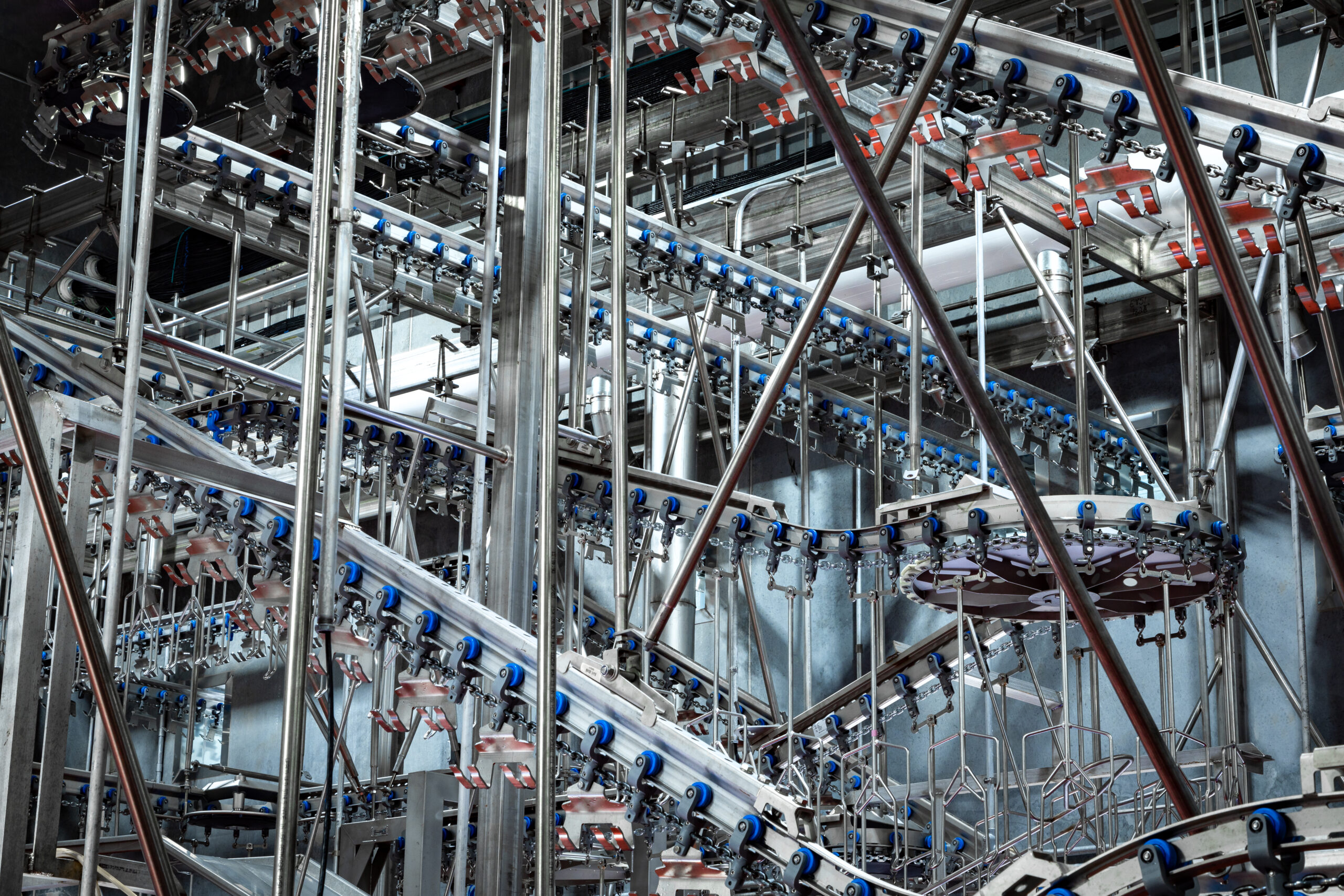
Building or increasing capacity for a protein production facility draws on a wealth of knowledge and experience, particularly with further processing. “We’ve done a lot of fresh meat processing facilities and a lot of further processing facilities,” says Paul Kornman, Project Executive, Food & Beverage at Gray. “In a beef plant, further processing could be to create the patty, for example. When you’re making pet food, however, you’re adding grains by blowing in cereals from silos outside.”
Blending multiple ingredients makes protein production more complex. “For foods that have a variety of flavorings, seasonings, and ingredients, allergen segregation is a big deal,” says Kornman.
“Alternative protein formulations often include a longer ingredient list, such as binders, gums, and fine powders to impart texture and mouthfeel,” explains Brian Shoop, Vice President, Process Engineering at Gray AES. “Those extra ingredients need additional processing and cleaning and conveying equipment, compared to standard protein processing. Experience with building a range of food & beverage facilities provides an invaluable knowledge bank of how to design and clean everything, from powders to liquids to animal protein equipment.”
For cultivated meat manufacturers, the front-end of a facility may look more suited to life sciences or pharmaceuticals than food. This hybrid of pharma-grade environments and food-grade throughput creates unique challenges for processing equipment and clean-in-place systems; areas where experience from multiple sectors converges.
“To cultivate meat, you’re growing cells and using a lot of bioreactors, which is unique to the food industry” explains Brett Goode, Executive Vice President, Food & Beverage at Gray. “You have extremely high standards for sterility and cleanliness that demand a level of care similar to pharmaceuticals. Having deep knowledge of USDA and FDA requirements is essential.”
An extensive understanding of food & beverage production also adds valuable perspective to site selection. Locating near major ingredient suppliers can offset rising logistics costs. “If six of your eight ingredients are within 100 miles, that helps protect profitability,” says Kornman.
Designing Protein Manufacturing Operations for Flexibility
Building in flexibility and scalability allows manufacturers to meet the demand for variety in protein-enhanced food and pet foods. “There’s just not the profitability to make one product in a facility,” says Kornman. “If you’re making one product in the morning and another in the afternoon, you need rolling-stock lines with sanitizing between products.”
“We start at the back end with what the manufacturer needs to sell,” explains Kornman. “If they’re producing two million pounds, we design one line that meets today’s throughput, then master-plan the space for a second line later. It’s about experiencing ROI quickly to make back the capital investment and easily expanding when they’re ready.”
The Bottom Line For Conventional Meat & Cultivated Meat Industry
Protein manufacturing in 2025 is diverse and dynamic. Innovation and operational excellence are reshaping every corner of the protein segment, from animal and pet nutrition to meat substitutes like plant-based meat and cultivated alternatives. Leaders who invest in facilities that enable protein extraction and processing efficiency are setting the stage for the next generation of sustainable food production.
Ultimately, the strength of tomorrow’s protein segment will rest on facilities engineered for agility, efficiency, and enduring resilience, helping the world produce food that sustains both people and the planet.
- Category:
- Industry
- Opinion
- Food and Beverage
Some opinions expressed in this article may be those of a contributing author and not necessarily Gray.
Related News & Insights
Food and Beverage
Snack Savvy: Making the Most of the Snack Food Boom
Industry
Manufacturing, Automation Solutions
Exploring the Next Generation of Industrial Manufacturing Robots
Industry
March 03, 2026Manufacturing, Design
Process Makes Perfect: Driving ROI through Manufacturing Process Optimization
Industry
March 03, 2026