The Science & Strategy Behind Cold Storage Facility Design
Cold storage facilities might look like oversized freezers from the outside, but Gray project executive Paul Kornman knows they’re far more sophisticated. These facilities serve as critical infrastructure in our food system, ensuring that products maintain quality and safety from processing through last-mile delivery.
“In a food processing facility, you have cold storage meant to temper product to the temperature it needs prior to processing, receive it at temperature and sustain, or temper it further for shipment,” explains Kornman, who holds a Bachelor’s degree in Agriculture and Animal Science from Morehead St. University and serves the Food & Beverage market at Gray. “The applications generally fall into two categories: protecting raw materials at the front end of production and safeguarding finished products before they reach consumers.”
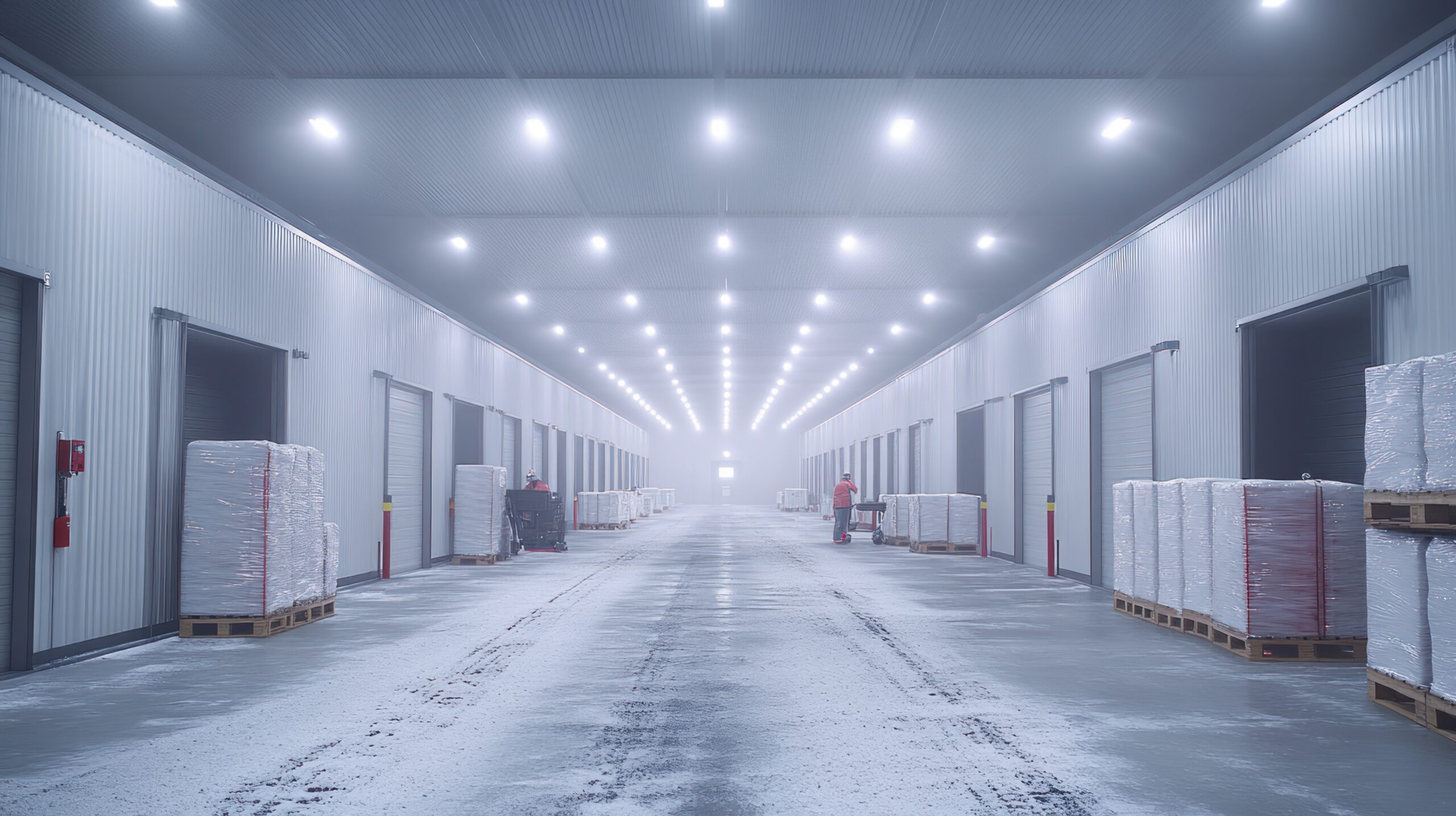
Large-scale operations often involve third-party logistics providers (3PLs) that operate dedicated cold storage warehouses, where companies lease refrigerated space for their inventory. It’s a model that allows businesses to scale their storage needs without the capital investment of building their own facilities.
Precision Engineering at Every Level
Complexity in cold storage begins with temperature requirements. These aren’t static systems with a single setpoint. Each application demands specific design considerations that go well beyond basic refrigeration.
“A freezer at 0 °F requires different safeguards than a cooler at 28 °F,” Kornman noted. The building envelope must protect against external weather variations while maintaining precise temperature control between different zones within the same facility.”
Customer needs can vary significantly in a cold storage facility. Some spaces are designed to house all production inventory on-site, providing complete control over their supply chain. Others utilize a hybrid approach, maintaining some inventory internally while partnering with 3PLs for additional capacity. The decision typically depends on location, logistics requirements, and long-term growth strategies.
Technology Driving Innovation
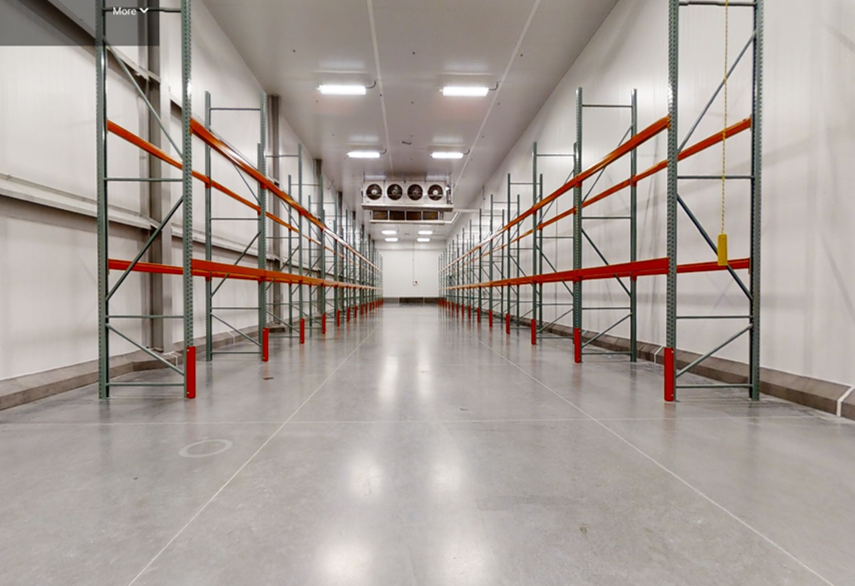
Automation and robotics are reshaping cold storage operations in meaningful ways. Automated Storage and Retrieval Systems (AS/RS) maximize space efficiency by replacing traditional forklift aisles with narrow crane pathways, significantly increasing storage density within the same footprint.
Advanced building management systems now leverage AI to optimize refrigeration output in real-time, responding to actual facility conditions rather than running on fixed schedules. This approach reduces energy consumption while maintaining product integrity—a critical balance in cold storage operations. Robotic palletizing systems are also gaining traction, reducing human exposure to extreme temperatures while improving operational consistency and efficiency.
Working with industrial refrigeration systems, particularly ammonia-based systems, requires rigorous safety protocols. Ammonia will asphyxiate a person very quickly if exposed, so facilities require process hazard analyses, ammonia sensors, and coordination with hazardous material response teams. These safety considerations are integrated into every aspect of Gray’s facility design, construction, and commissioning services, reflecting industry best practices and regulatory requirements.
Gray’s Integrated Approach
Gray’s comprehensive in-house capabilities are centered on design-build, but extend well beyond construction to serve the needs of this highly specialized market. Our integrated team includes refrigeration engineering, automation specialists, packaging experts, process designers, and equipment manufacturers—all working collaboratively under one roof. This approach allows Gray to efficiently address complex challenges such as calculating precise heat loads for high-volume facilities or designing one-of-a-kind conveyor systems that seamlessly integrate with cold storage operations.
“There’s no aspect of cold storage that Gray can’t handle,” says Kornman. “It could be a standalone distribution center or cold storage integrated within a processing facility—we have the expertise to execute.”

Designed for the Future
Looking ahead, Kornman sees automation as the primary driver of the industry’s evolution. Labor market challenges are accelerating adoption of robotics, RFID tracking systems, and advanced process controls to maximize operational efficiency.
Interestingly, while some projects trend toward larger, more automated facilities, there’s also a growing demand for smaller, more flexible cold storage solutions. Local food movements, regional distribution strategies, and changing consumer preferences are creating opportunities for versatile facilities that can adjust operations in response to more acute shifts in demand. These facilities must be designed for fast changeover with little to no downtime—an approach that demands precision and experience-based insights from design-build partners.
“We’re positioned to support both large and small projects,” Kornman said. “We work closely with our customers to develop designs that align with their operational needs, budget parameters, and growth objectives. Our experience and established relationships enable us to deliver solutions that truly fit each customer’s unique requirements.”
Ultimately, successful cold storage projects require understanding the business behind the building and recognizing that each facility supports a company’s mission to deliver safe, quality food products to consumers. Feeding the world gives these companies purpose; efficiency and reliability give them profits—and that’s where Gray comes in.
- Category:
- Stories
- Industry
- Food and Beverage
Related News & Insights
Manufacturing, Automation Solutions
Exploring the Next Generation of Industrial Manufacturing Robots
Industry
March 03, 2026Manufacturing, Design
Process Makes Perfect: Driving ROI through Manufacturing Process Optimization
Industry
March 03, 2026Food and Beverage
What's Driving the Growth of the Protein Segment?
Industry, Opinion
October 31, 2025