The Importance of Flexibility in Snack Food Production
Snack foods may be known for their miniature servings, but they’re a jumbo-sized market that’s growing bigger all the time. SNAC International’s 2025 State of the Industry Report shows that global sales increased 4.8% over the previous year, while Market Ntel Advisors report that the U.S. snack food industry is valued at more than $172 billion in 2025.
With market growth, shifting consumer demands for new flavors, snack food packaging options, functional ingredients, healthier snack alternatives, and more have spurred snack food manufacturers to adapt quickly without sacrificing efficiency, food safety, or quality. Amid this expansion, significant changes in market conditions and consumer trends are certain to continue, compounding the challenge for food & beverage processors trying to keep pace. To stay competitive, snack food companies are investing in innovative solutions that make them more flexible—a critical factor for long-term success.
“Consumer preference is a big catalyst that drives the need for manufacturers to add more flexibility in their production lines,” says Dean Elkins, senior director, Robotics & Vision, Gray AES. “For example, providing more available snack options requires fast, flexible, reliable changeover in manufacturing and packaging lines. In many instances, manufacturing facilities can’t add new lines to accommodate additional products or package form factors, so building flexibility into automated processes is very important.”
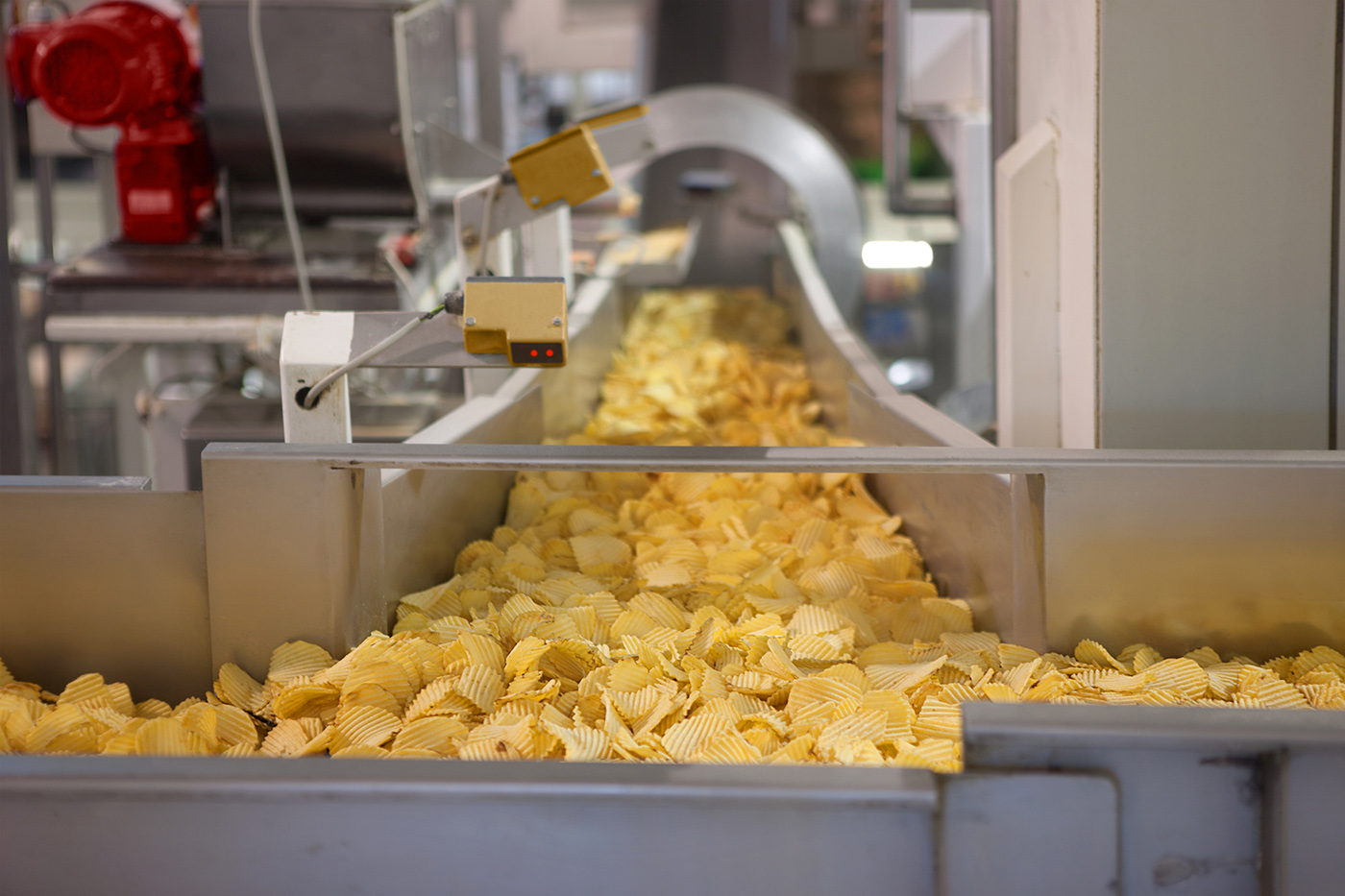
Reimagining the Production Line
Snack food manufacturers are reshaping their production lines, shifting from mass production of a few core products toward agile, highly flexible manufacturing. This has led to widespread changes in formulations and ingredients, processing technology, and packaging.
Any changes to formulations and ingredients add significant challenges to existing production efficiency. For example, the demand for “clean labels” and healthier options has led manufacturers to explore new preservation methods, ingredient sourcing, and processing techniques to maintain shelf life without additives.
Dietary-specific inputs pose another challenge. “The rise of plant-based, gluten-free, keto-friendly, and other dietary snacks necessitates production line segregation or changeovers that thoroughly sanitize the production lines,” says Gary Garfield, vice president of engineering, Gray AES. “Newer, modern equipment is typically much more hygienic in nature and easier to clean.”
In processing, manufacturers are replacing single-use equipment with modular, multi-purpose machines that can be quickly retooled to create different food products, flavors, and sizes. This reduces downtime and supports rapid flavor innovation. Traditional human quality control inspection is increasingly supplemented with automated systems integrated to monitor quality in real time. “New processes are needed to make the formulation and required ingredient changes, but cannot sacrifice taste or texture,” says Garfield. “For example, a ‘baked, not fried’ snack requires different equipment and process parameters compared to traditional frying.”
There is also greater variety in pack formats for snacks, driven by sales locations and consumption trends. Demand for on-the-go convenience means production lines must handle diverse packaging formats, from single-serving bags and pouches to multi-serving containers for “pantry” packs. “This requires reconfigurable and high-speed packaging machinery,” said Garfield.
Unlocking Flexibility: Process Design, Equipment, and System Integration
Manufacturers must be quick to respond to ever-changing consumer demands. An efficient way to do so is to configure process lines to batch products of multiple packaging sizes or shapes down the same line. This can be accelerated by automated systems that allow employees to adjust to recipe or packaging changes through intuitive interfaces. “From scales, to baggers, to cartoners, to case packers, automation must be designed to allow for quick and accurate changeover, allowing for planned production output,” says Elkins. “This includes conveyor speeds, adjustable side guides, robot programs, and in-line equipment set up.”
Key features with flexible systems include modular components, tool-free adjustments, and automated recipe management. Digital controls allow operators to store and recall product-specific recipes for different bag sizes, filling weights, or sealing parameters at the touch of a button. This eliminates manual adjustments and ensures consistent quality.
Modular units offer another lower-cost, high-impact solution to scale up production capacity when demand is unexpectedly high. With modular technology, manufacturers can also execute test runs of new products and gain insight into how the process would scale for full-production systems. Skid systems and other modular units also have much smaller footprints than traditional process lines, making them ideal for facilities where boosting production capacity is challenging due to space constraints. Their smaller size also makes them easier to remove or store quickly and cost-efficiently.
Modular systems are often located in pilot plant facilities and/or vendor test facilities, where they can be configured to run small-scale test batches of new products. This allows manufacturers to gather critical data on various processes, quality, and operator requirements before committing to a full-scale rollout. “For line modifications, instead of purchasing an entirely new, costly production line for each new product, a manufacturer can simply invest in a new module or move modules,” says Garfield. “This helps to future-proof the factory by allowing it to scale up or down as production demand changes. It also offsets investment risk from highly dedicated lines to modular lines that can be moved and repurposed, reducing capital expenditure.”
Digital Tools Deliver Tangible Results In the Snack Food Market
It has quickly become standard practice for snack food producers to use robotics, AI, and process automation to enable faster changeovers and maintain consistent product quality. Technological advancements in automation and robotics allow companies to integrate new materials and packaging methods seamlessly while still meeting regulatory standards.
As production lines change over to accommodate new product runs, robots can either be reprogrammed to facilitate a new process, or an existing program can be called up to allow for faster changeover. This improves operational efficiency and maintains consistent product quality. Robots can be programmed with quick-change tooling to automatically swap out end-effectors, which greatly reduces machine set-up time. Robot gripper designs such as those with articulated fingers for grasping or pneumatic soft grippers for wrapping delicate objects can allow for the robotic handling of multiple product form factors, adding even more flexibility to the automation scheme.
“Machine vision with AI adds the ability to not only aid in robot guidance, but also increased quality control through anomaly and reject detection routines,” says Elkins. “Imperfections in packaging or labeling can be detected upstream and either passed or rejected, eliminating quality control headaches. Vision systems with AI engines and embedded font libraries make quality-intended systems far easier to program and deploy.”
Other capabilities include instant calibration, real-time recognition of parts and products, optimized scheduling and production planning, machine performance and availability, predictive maintenance, and automating tasks that once required human oversight.
AI provides the data intelligence and predictive capabilities to enable robots to execute physical tasks with speed, precision, and flexibility. The incorporation of advanced quality control measures such as vision systems ensures that product content is being placed in the correct packaging. Recently, consumer’s growing demand for sustainable packaging has required greater flexibility from automation solutions. “Consumers are increasingly concerned with recyclable materials and sustainability,” says Garfield. “This pushes manufacturers to explore and implement new, eco-friendly packaging materials, which can be more expensive and require different packaging equipment.” With the rise of AI-powered automation in downstream operations, this challenge may be the impetus for further innovation.
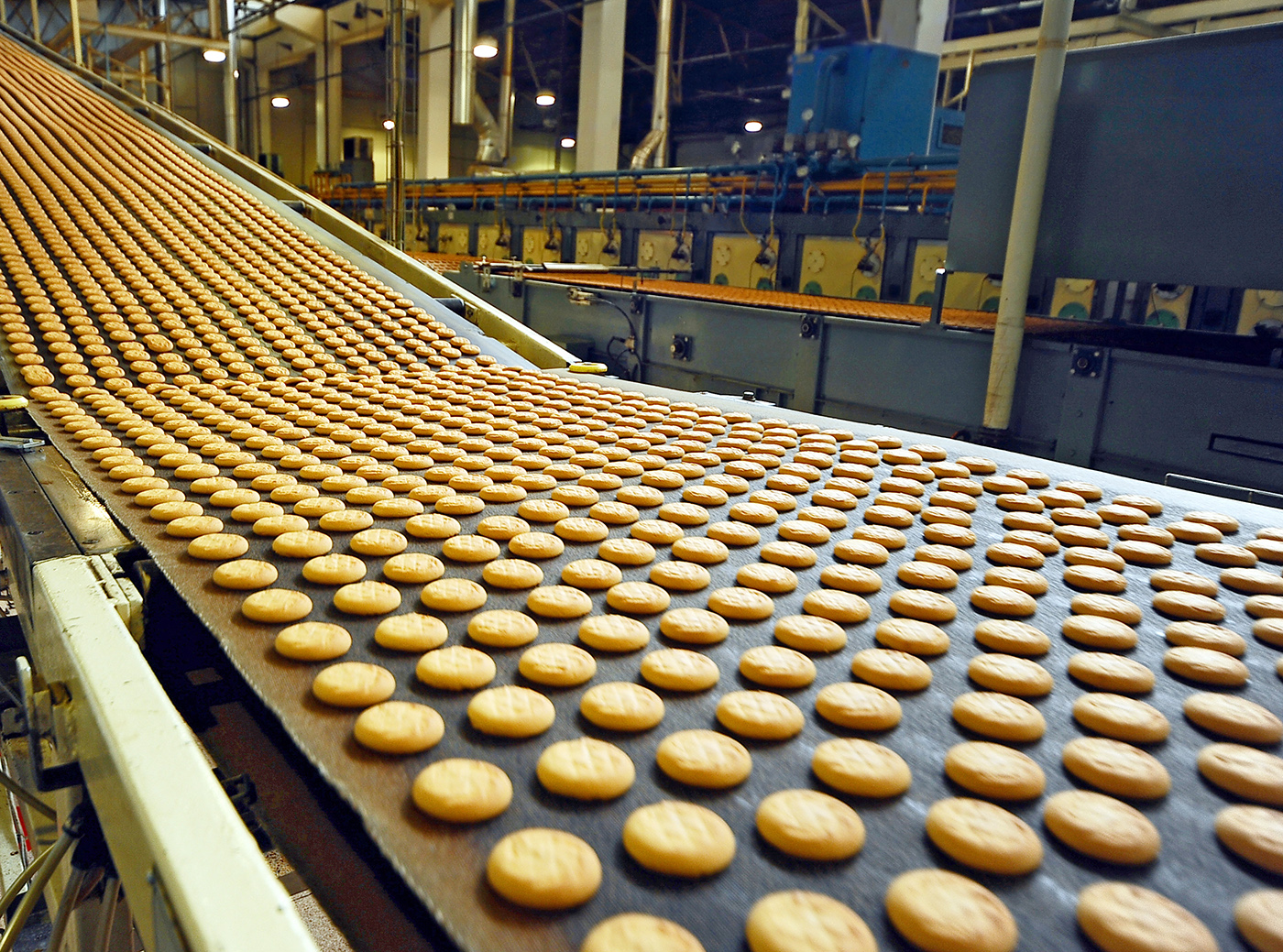
Flexibility Brings It All Together In The Snack Food Industry
In the current landscape, where food & beverage processors must offer a broader and more diverse lineup of products, flexible operations and customized solutions are a necessity, not a luxury. For instance, many large food companies produce animal-based and plant-based protein snacks, which require strict ingredient segregation and different processing parameters that introduce layer upon new layer of complexity. Production lines must now handle specialized ingredients such as alternative protein sources, fiber, probiotics, and other materials that add functional benefits. “Faster changeover is a requirement to accommodate multiple products being run on the same line, so the importance of accuracy and ease of changeover in line design remains paramount,” says Elkins.
Effective automation and purposeful deployment of AI play a valuable role in solving these challenges. Snack food manufacturers must invest in digital technologies and best practices to manage their operations, vendor relationships, and supply chain management more efficiently. The integration and continued advancement of AI, machine learning, robotics, and automation will allow manufacturers to quickly reconfigure production lines, reduce changeover time, and optimize batching processes when responding to evolving trends in the market—including growth in emerging markets where demand for packaged snacks continues to rise.
Related News & Insights
Food and Beverage
What's Driving the Growth of the Protein Segment?
Industry, Opinion
October 31, 2025Standing 5’2” with No Fear: Meet Rebecca Stephenson
Stories
March 20, 2026Manufacturing, Automation Solutions
Exploring the Next Generation of Industrial Manufacturing Robots
Industry
March 03, 2026