Strategic Use of Technology Key to Improved Construction Worker Safety
“We put safety and quality of life first.”
Gray’s No. 1 core value isn’t just a reflection of our heart for people—it’s an acknowledgement of the dangers inherent to the construction industry and a daily rededication to our responsibility to keep safe every person who encounters Gray.
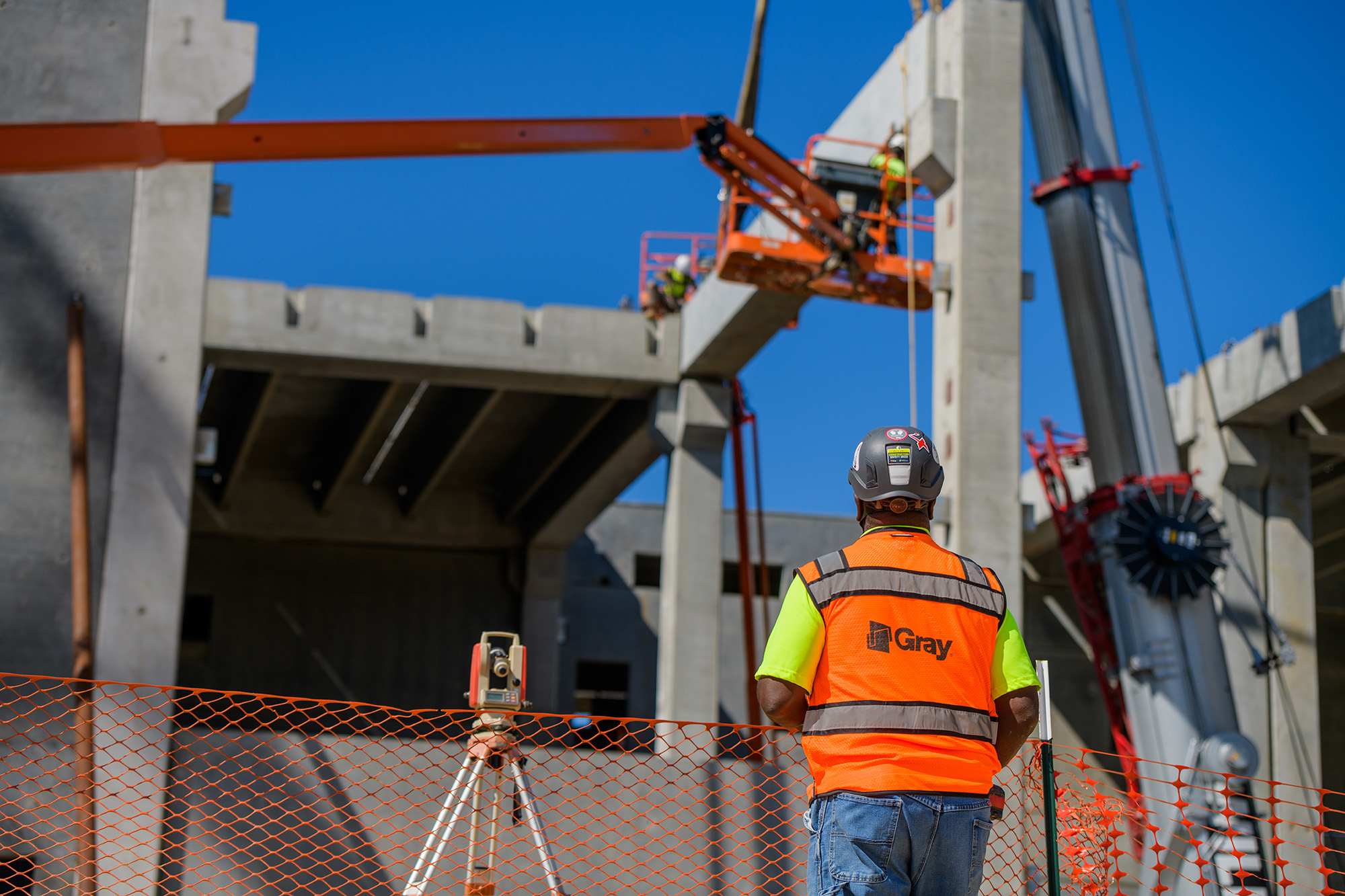
The construction industry’s hazards are unique in type, frequency, and breadth. Every day, construction workers must operate in a highly active environment full of heavy machinery and materials, perform tasks at heights or below ground, labor in wet or dusty conditions, and work with or around live power, highly pressurized systems, and hazardous chemicals. There’s little argument that a place of work with these dangers requires special safety measures. These efforts often begin by educating workers on safe practices, providing appropriate personal protective equipment (PPE), and implementing construction safety rules to protect workers, prevent personal accidents and property damage. Even so, construction remains the most dangerous occupation in the U.S. private sector, accounting for about 1,100 fatalities per year. The U.S. construction industry also lags much of Western Europe in safety, according to Global Construction Review.
How can we improve?
According to the American Institute of Constructors (AIC), construction firms that invest in safety training and innovative construction technology “can realize a 59% reduction in injuries and accidents on job sites.” This approach involves improved risk assessment, monitoring individual worker safety in real time, and enhanced project efficiency, leading to safer and more hazard-free working conditions.
These benefits extend beyond safeguarding life and limb. When construction companies invest in safety technology for their people, they also reduce operational costs, as the decrease in insurance claims, property damage, and lost time more than makes up for the cost of the initial investment. An improved safety record also buoys a company’s reputation in the marketplace, helping to win more job bids, recruit and retain top talent, and build a collaborative, proactive company culture. Sounds great, but how does technology help the industry realize this goal?
Types of Construction Site Safety Technology
Construction site safety products fall into two categories: hardware (tools and equipment) and software (simulations, real-time diagnostics, data analytics). They can also be delineated by their purpose: are they proactive and preventative (pre-task plan documentation, incident trend analytics, lockout/tagout) or reactive, protective measures (helmets, steel-toed boots, harnesses)? An effective safety program must assume a balanced approach between hardware and software as well as proactive and reactive technology. By investing in safety technology, general contractors can make better-informed, data-driven decisions, often in real time.
Hardware
Examples of advanced safety hardware include smart vests and other wearables, drones for surveillance and inspection, cameras and sensor networks, robotics, and 3D printers.
- Wearables—smart safety helmets, safety goggles, safety gloves, vests, and wristbands monitor worker vital signs, detect hazardous conditions, and provide real-time alerts in case of accidents or unsafe situations, enabling rapid response in emergencies.
- Drones—first-person view (FPV) drones allow operators to quickly and easily conduct aerial surveys, monitor site progress, inspect hard-to-reach areas, and identify potential fall hazards. More advanced drones can improve safety by finishing dangerous tasks quickly, without sending a surveyor up on a lift.
- AI-powered systems—the perfect blend of hardware and software, AI-powered systems use cameras, sensors, and other Internet of Things (IoT) tools analyze video footage and other environmental data in real time to identify unsafe behaviors and predict potential hazards. For example, AI dash cams provide forward collision warnings, headway monitoring, tailgating alerts, and detection of distracted driving or drowsiness.
Software
Most safety incidents result from communication breakdowns—not shortages or failures of hardware. Software for project management and construction safety helps contractors minimize human error due to disorganization and unclear directives or procedures. These platforms reinforce consistent safety instructions across teams, often paired with construction site safety tips to keep workers informed and aligned.
Companies such as HammerTech and Procore offer digital systems that improve operational efficiencies and improve worker safety practices by providing tools for project planning, material procurement, workflow, and controlling activity levels at the jobsite. These systems are part of an industry trend toward “safety by schedule”—a proactive approach used to minimize risks by strategically sequencing tasks to limit personnel on site and avoid concurrent high-risk activities.
Through simple, intuitive interfaces and scheduling software, managers can clearly identify conflicts and reschedule or amend activities. Shifts can also be managed to reduce worker fatigue. This approach is increasingly important to customers eager to see how efficient project scheduling can also help to prevent safety incidents, lost time, and property damage.
Other software with safety applications includes:
- Predictive analytics—analysis of safety data and industry trends is used to forecast future incidents and identify potential risk factors. This allows companies to prioritize high-risk areas and allocate resources effectively to keep workers safe.
- VR/AR—these platforms offer immersive training experiences, allowing workers to practice safety procedures in a risk-free construction environment. With virtual reality (VR), workers navigate realistic scenarios without real-world risks. Augmented reality (AR) overlays digital information in the real world—for example, smart glasses.
Operational Benefits
Integrating safety technology into construction operations provides significant cost benefits by boosting overall project efficiency. These technologies also enhance a company’s reputation, leading to better business opportunities.
Key benefits of construction occupational safety technology include:
- Reduced injuries—by mitigating common construction site hazards, safety technology reduces the number of accidents and injuries on construction sites, enhancing workplace safety
- Improved efficiency and productivity—automated safety processes and data-driven insights streamline workflows, reduce downtime, and improve overall project efficiency
- Enhanced training and preparedness—VR/AR training improve worker skills and preparedness, leading to safer work practices
- Increased compliance with safety standards—safety technology can help construction companies ensure a safer and more compliant work environment
- Better communication and coordination—digital platforms facilitate instant communication and coordination among project personnel, enabling prompt responses to job site safety concerns
- Data-driven decision making—analysis of data from various sources results in proactive risk management and informed decision-making, leading to safer construction practices
- Lower insurance premiums—an outstanding safety record reduces out-of-pocket incident costs, lowers premiums, and results in more accurate insurance pricing
Moving Forward with Safety
Robust safety technologies such as AI-based training platforms, advanced safety protocols, software integration, newer and safer equipment, hazard mitigation, and improved compliance help construction companies and safety professionals significantly reduce the risk of accidents on the construction sites.
OSHA indicates that for every $1 invested in effective safety programs, construction businesses will experience $4 to $6 in cost savings as illnesses, injuries, and fatalities decline. Although the up-front investment in advanced safety technologies can seem substantial, the long-term financial benefits far outweigh the initial costs of enforcing safety standards.
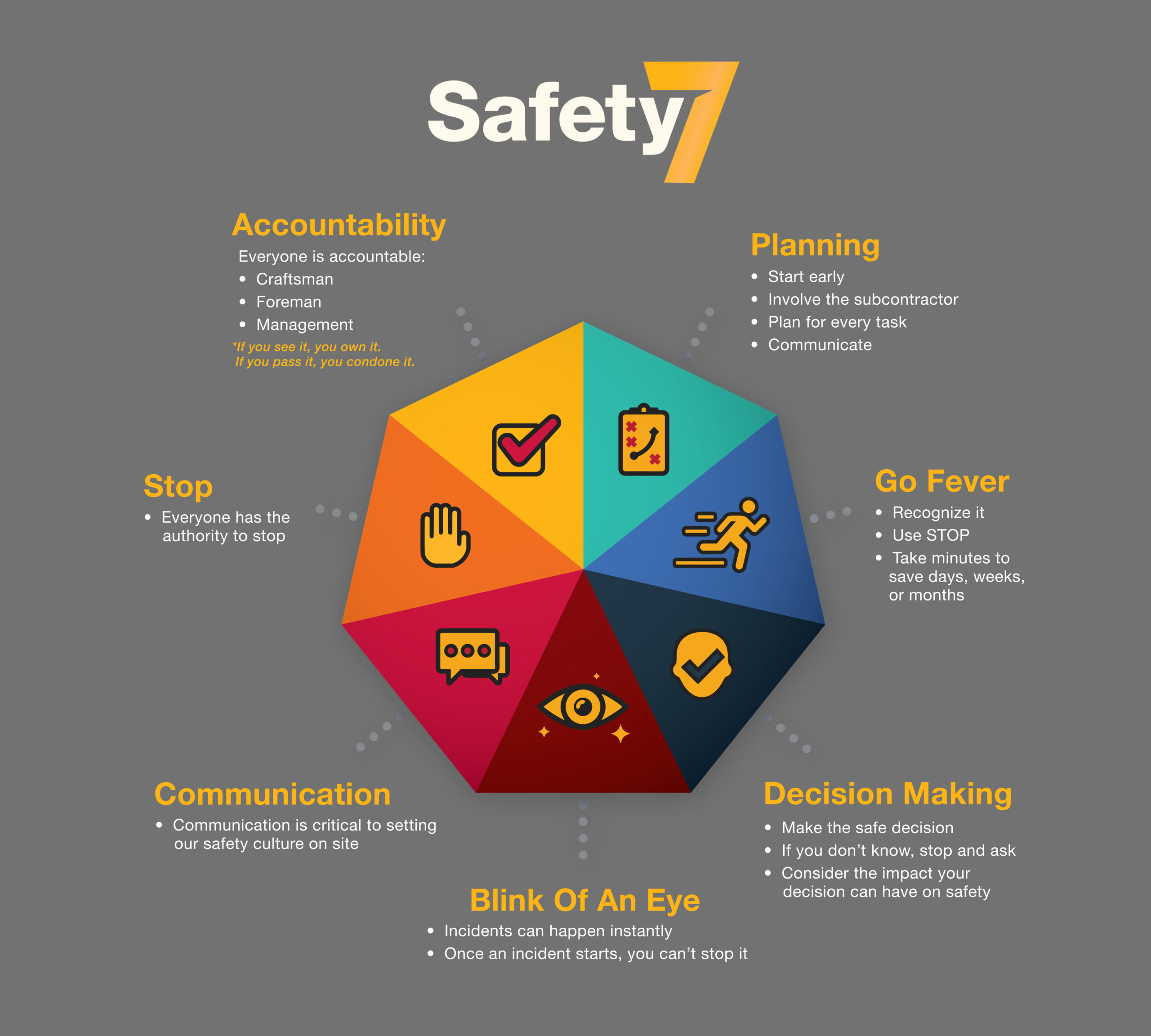
To be as effective as possible, safety should be an ongoing mission. Construction firms must keep pace with emerging technologies to protect construction workers, support the well-being of their teams, meet deadlines, and offer the best speed and service to their customers. Safety performance is also a significant part of a builder’s brand image, resulting in improved business relationships, higher-value construction projects, greater market share, and being an employer of choice for the industry’s most skilled workers.
Some opinions expressed in this article may be those of a contributing author and not necessarily Gray.