Gray and NexGen Push Innovation with Sustainable Concrete Solutions
NexGen Contracting, Gray’s self-perform arm, is leading the charge toward more sustainable construction practices through its concrete division.
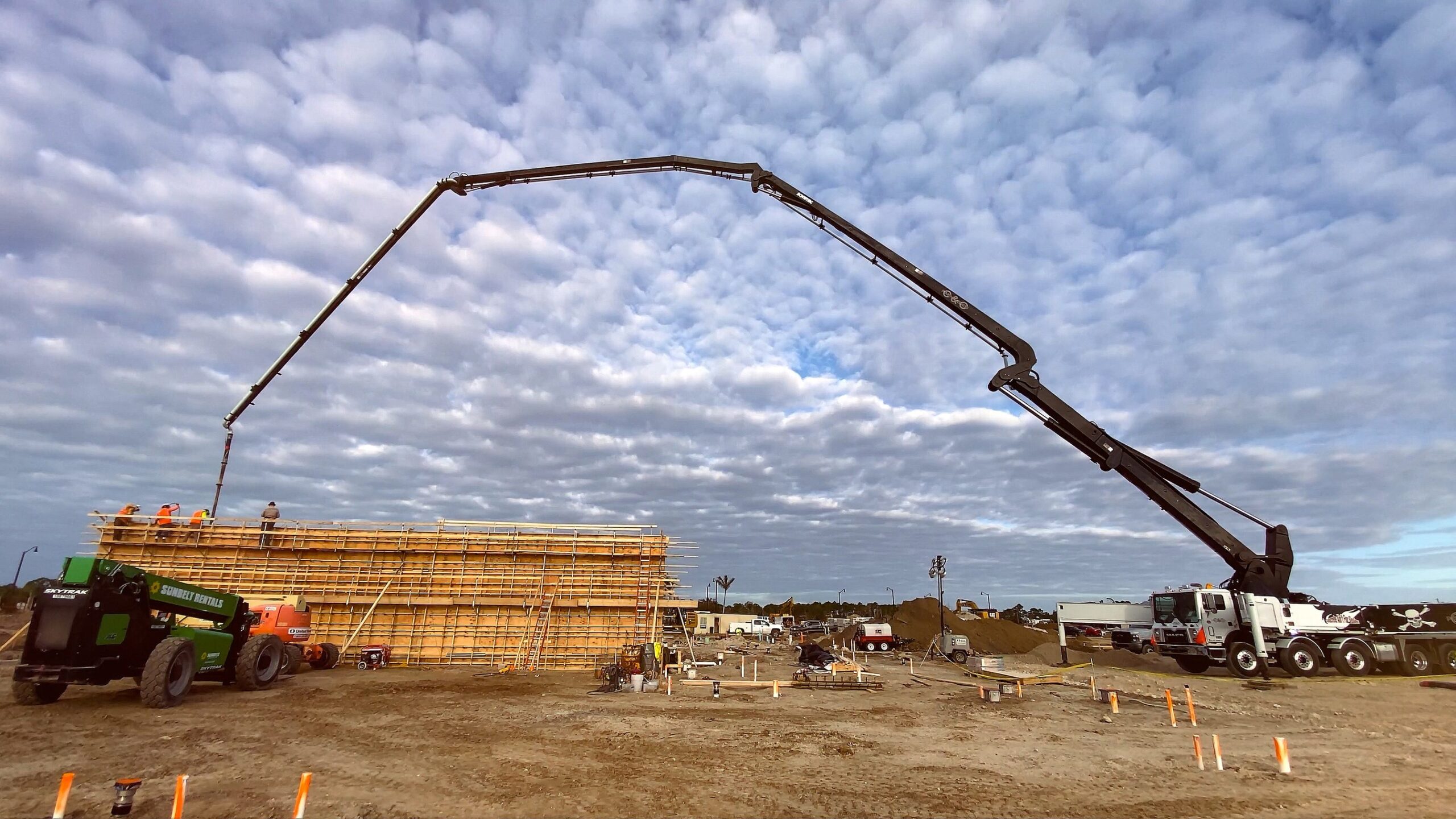
NexGen’s Concrete Division is rethinking how concrete is produced, specified, and delivered to meet the demands of a changing construction industry, without compromising performance.
Concrete is one of the largest consumable products on construction projects—second only to water—particularly when it comes to cement-based materials, which represent a major portion of project volume and cost. From early planning throughout the construction process, NexGen Concrete is tackling the challenge of material efficiency by optimizing mix designs, reducing cement content, and exploring value-added alternative materials that help extend durability while minimizing waste.
“Durability and sustainability don’t have to be separate goals,” says Ryan Lerman, Operations Manager for NexGen Concrete. “By reducing cement, using fiber reinforcements, and applying value engineering early in the process, we’re delivering longer-lasting solutions that are also better for the environment.”
Building a Sustainable Future For Concrete Production
A recent development in NexGen’s approach is the integration of its own mobile batch plant. This approach not only allows NexGen to serve as the ready-mix supplier for projects and more actively support mix designs, but it also cuts down on time and costs associated with transportation, lowering overall energy consumption while improving control over the quality of concrete materials.
This proactive, vertically-integrated approach is especially attractive to customers in forward-looking industries like data infrastructure and renewable energy. Together with Gray AES architects and engineers, NexGen is often engaged early in a project’s design phase to help shape the path toward more sustainable outcomes. This involvement is fostered by the design-build approach, offering not only sustainability benefits, but also long-term durability and lower maintenance needs for complex and large-scale concrete structures.
As a corporate sponsor of the American Society of Concrete Contractors and the American Concrete Institute and with team members serving on key committees within these organizations, NexGen is ideally positioned to impact the future of sustainable concrete research, education, and implementation across the broader concrete industry.
“We’re using optimization tools to discover the optimal mix design and performance for our team,” says Dan Lucas, Senior Manager, Project Controls & Finance at NexGen. “We’re really pushing test trials and mock-ups to better position ourselves for opportunities.”

How NexGen Helps Optimize Concrete Production Before the Pour
NexGen uses two primary methods to make concrete scopes more sustainable on projects. The first is addressing the heart of concrete’s sustainability concerns: cement manufacturing, or more specifically, the clinker within the cement. Mix formulas can alter the cement content, aggregate, and reinforcement, so establishing guidelines and objectives is key for educating teams on best practices. “A 1L-type mix can potentially replace 15% of the clinker with limestone, which is more sustainable,” says Lucas. “The second method is to optimize the design, which we’re already doing on every project. We can make the design as much as 40% more sustainable before we even look at the mix itself.”
Communication and good old-fashioned project management are important aspects of this optimization process. Are the floor slabs intended to serve for 20 years or 40? What’s the daily volume of traffic? What type of processes occur on the floor, and what equipment is involved? “Understanding owner expectations is key,” says Lerman. Depending on use, project engineers may be able to reduce an initial spec for 8-inch slab down to 6 inches. When applied across a 300,000 s.f. industrial facility, this can significantly reduce material costs and shorten the project schedule.
Quality is an essential component of the environmental sustainability conversation. “If quality is compromised and you have to tear out the concrete and repour or repair, that’s not very sustainable,” says Lucas. “We’re pursuing innovative mixes, but as functions of quality and durability—never at their expense. A change such as optimizing the mix design for a slab-on-grade floor doesn’t affect building foundations, so there’s virtually no impact to the structural integrity or safety of the building.”
Several years ago, price gaps between sustainable and traditional concrete mixes hindered widespread adoption of sustainable options such as 1L mixes. More recently, however, the market has caught up to the demand, closing this gap and balancing the market share. Today, 1L mixes account for around 55% of the market.
While the concrete industry has traditionally been slow to adopt change, NexGen is setting itself apart by embracing innovation and offering customers smarter, more responsible options from the ground up. By partnering closely with concrete industry associations, advancing sustainable practices, and bolstering its on-site batch capabilities, NexGen continues to push toward a scalable, sustainable alternative that helps redefine what’s possible for the built environment.
About Gray:
Gray is an integrated design-builder, specializing in end-to-end solutions in Construction, Professional Services, Specialty Equipment, and Real Estate. Since 1960, we have grown from a regional contractor to a nationally ranked leader, serving top companies in our core markets. Our comprehensive services—spanning design, engineering, construction, automation, equipment, and real estate—make us a trusted partner for every phase of a project. Whether designing and building a state-of-the-art facility, fabricating custom process equipment, or implementing advanced automation, our expertise drives innovation and value at every step. At Gray, we don’t just build projects—we build lasting partnerships.
- Category:
- Corporate News
- Construction
- Self-Perform
Some opinions expressed in this article may be those of a contributing author and not necessarily Gray.