Exploring the Next Generation of Industrial Manufacturing Robots
AI-powered industrial robots are advancing manufacturing by improving efficiency, quality, and safety through smarter automation and human collaboration. From cobots to intelligent tooling, next-generation robotics help manufacturers stay competitive despite labor and cost challenges.
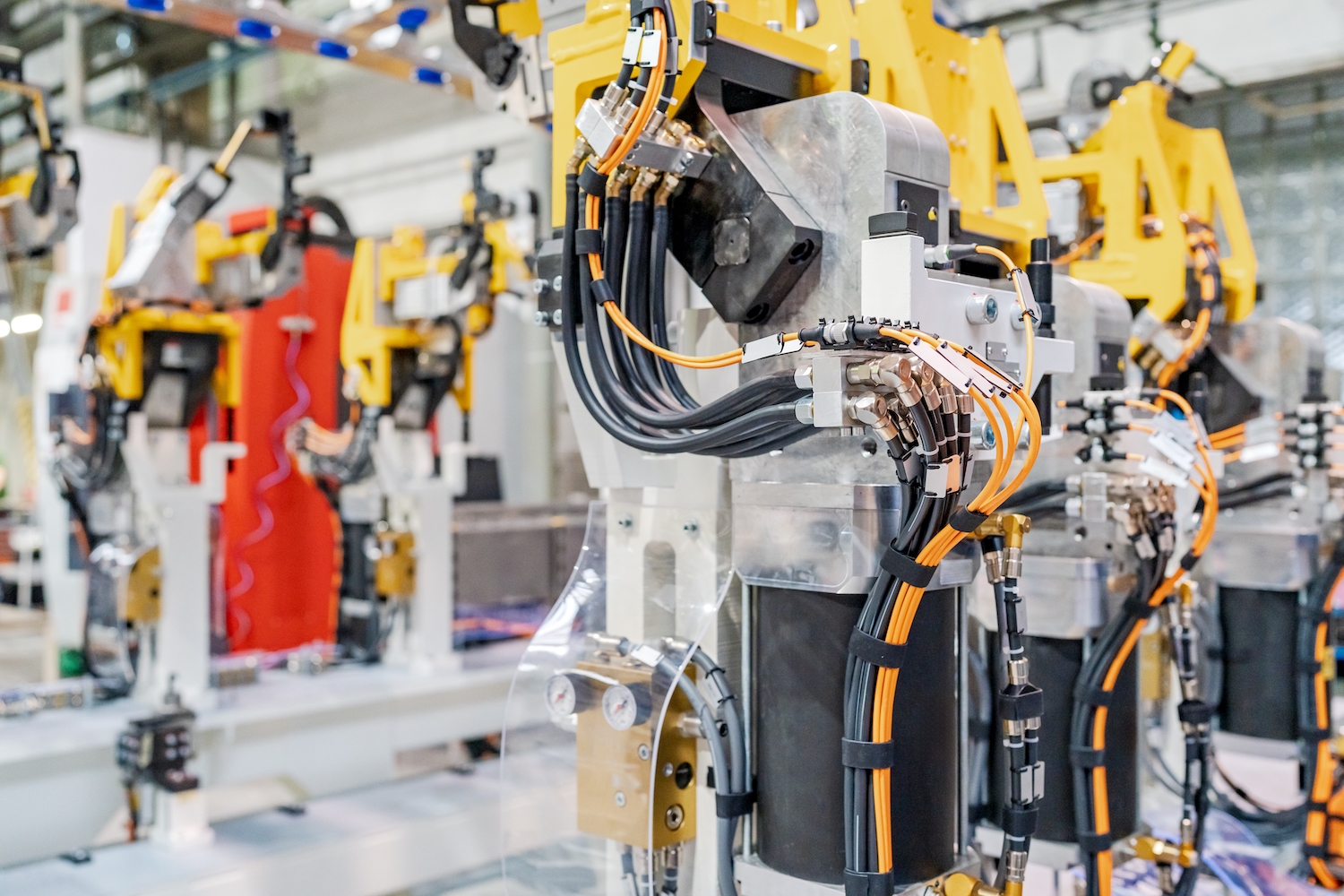
Many industrial manufacturing robotics systems in use today are not that different from those introduced a decade ago, such as robotic arms on production lines, packaging and palletizing equipment in end-of-line zones, and automated storage and retrieval systems in warehouses. However, now equipped with innovative Internet of Things (IoT) and artificial intelligence (AI) technologies, industrial manufacturing robots are rapidly evolving. These advances in industrial automation are boosting product quality, operational efficiency, productivity, and workplace safety across the manufacturing industry. Robots give manufacturers a competitive edge and help get products to market faster.
AI Drives Industrial Robot Innovation
Industrial robotics—with features such as advanced process controls, sophisticated vision systems, sensor networks, and decision-making capabilities—are moving beyond traditional automation systems. The combination of AI and productive human-robot interaction allows robots to operate in more complex, unstructured industrial environments—a departure from performing simple, pre-programmed tasks with little to no variance. For example, as robots learn more about their surroundings, they get better at locating, identifying, and grasping objects, something that traditional, fixed-fixture robots cannot do. Smart industrial robots can also quickly process high-mix, low-volume batches (with some operator assistance), saving time and resources while handling increasingly complex tasks.
“A robot that properly locates and picks up randomly placed objects is an impressive feat of engineered intelligence,” says Andy Thompson, senior applications engineer for Gray AES. “We have some challenging bag picking applications today that would not have been possible ten years ago.”
Learn more about Gray AES’ advanced automation and robotics services.
AI also makes inline, real-time inspection of materials and parts possible, detecting microscopic defects during production, such as those within welding seams. These systems represent a new era of intelligent automation, where machines continuously learn and adapt to improve quality outcomes.

AI and Miniaturization
Combined with AI, the continued trend of electronics miniaturization is leading to more sensitive and safer collaborative robots and safety systems, including more powerful industrial robot controllers with increased multitasking capabilities. “This allows industrial robots to take on more cell control functions that would be traditionally handled by an external programmable logic controller [PLC], simplifying overall robot cell design and implementation time,” says Thompson.
Innovative designs and emerging automation technologies are reducing the size of industrial robots while maintaining or even increasing their power density. The lighter weight of smaller robots speeds up manufacturing operations and shortens cycle times, improving productivity. Small industrial robots can operate in tight spaces, making them ideal for inspecting infrastructure, electronics manufacturing, and other equipment. Because lighter robots are more energy efficient, they tend to operate on battery power, reducing energy consumption.
AI-enabled small robots can also improve the efficiency of micro-assembly operations such as inspecting and connecting micron-scale, complex components and devices (for example, electronics or medical devices) with high accuracy.
Collaborative Robots
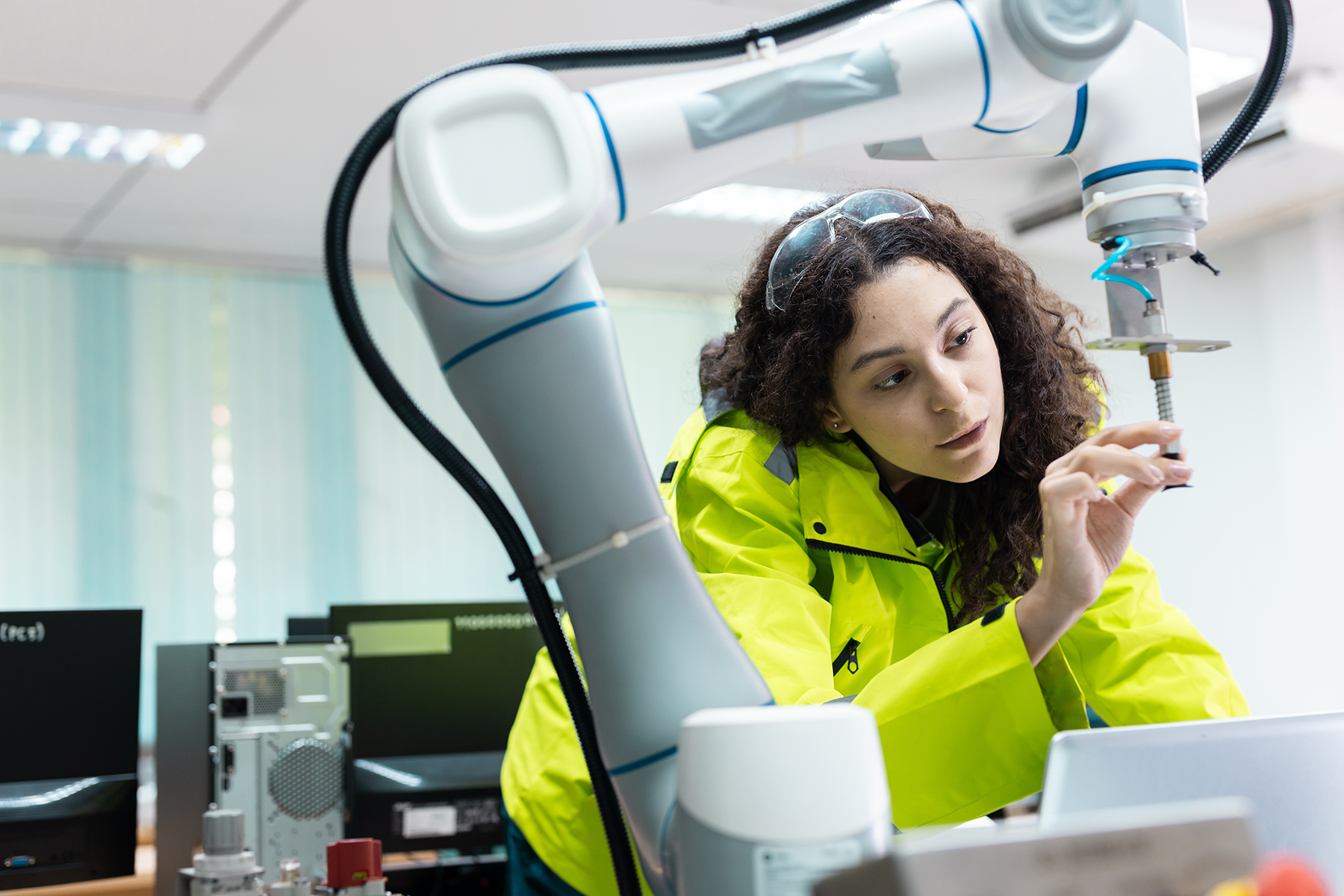
Collaborative robots, or “cobots,” are designed to operate safely alongside human workers in the same cell, enhancing efficiency, precision, and overall safety. Cobots can be customized to perform specific, repetitive tasks, such as machine tending, assembly, inspection, and quality control. Using robots to lift heavy or awkward materials and components reduces worker fatigue and the risk for serious injury.
According to McKinsey, cobots can increase productivity by up to 20%, driving operational efficiency and supporting faster delivery of new products to customers.
For one mid-sized manufacturer, investing in cobots with vision systems helped the company grow its revenue by 230%. While gains of this magnitude are uncommon to say the least, they underscore the potential impact that advanced robotics can have on an operation reliant on manual labor or first-generation automation.
A key R&D objective for collaborative robots is improving overall safety and the interaction of robots with their surroundings, including human co-workers. This is a key priority because the perception of cobots as unpredictable or erratic is a huge impediment to their wider adoption. The integration of large language models (LLMs) may help to shift this perception by naturalizing the transition from the alien to the familiar. LLMs make it much easier to instruct robots with common voice commands instead of complex, specialized programming. AI allows robots to predict human movement and intent, changing their path or speed to prevent collisions.
Articulated Robots and Delta Robots
Manufacturers often rely on two types of robots: articulated robots and delta robots.
Articulated robots are equipped with multiple axes that allow them to work in different planes of motion. Programmed for heavy-duty actions, these robots move heavy and bulky materials and carry out strenuous manufacturing tasks such as welding and large-scale finishing and painting.
In contrast, delta robots are designed to perform lighter, faster operations. They have three or four spider-like arms that perform high-speed pick-and-place operations. Delta robots are ideal for the quick delivery of consumer goods, packaging, food, and pharmaceutical products, where speed of delivery is critical.
Articulated robots are preferred for large/heavy tasks in industrial sectors, while delta robots are mostly used for assembly and packaging lines. Both robot types reduce the need for human labor in dangerous roles, thereby enhancing factory safety, efficiency, and productivity across a variety of industrial sectors.
Smart Tooling and End Effectors
Also known as end-of-arm tooling (EOAT), end effectors are highly useful for moving, assembling, or processing parts. Advanced models incorporate AI, sensors, and machine vision to engage in high-performance part-handling in real time. With the help of AI, robots equipped with EOAT can make their own handling decisions, such as using measurements of force and torque to determine the best way to grip a product without causing damage. These sensors also key to smart soft robotic end effectors that can handle fragile or irregularly shaped items, a major improvement over traditional rigid grippers.
Types of advanced end effectors include intelligent grippers for adaptive handling, collaborative grippers for safety and ease of integration with cobots (often with force-limiting features), and customized end effectors for assembly, welding, and machine tending.
IO-Link and other wireless communication systems provide real time communication between the end effector and the control system, increasing flexibility by removing mechanical constraints and reducing downtime through quick diagnostics/parameterization. In some facilities, these systems also support broader operational functions such as inventory management, connecting production data with enterprise systems.
An Innovative Future
Next-generation robotics include advanced AI-powered cobots, soft robots, and autonomous mobile robots that transport materials across manufacturing floors without fixed pathways. These capabilities include real-time decision-making, vision systems, pick-and-place, and self-programming.
“Design trends in industrial robots will be driven by higher payloads, faster speeds, and more powerful controllers,” says Thompson. Other priorities are increased safety and the ability to operate in challenging environments.
Return on investment has become less of a topic of discussion among manufacturers, who are struggling to maintain consistent labor resources. “Anything we can do to automate those processes, they welcome,” says Thompson.
Price is still a concern, considering a robot cell can cost more than $1 million, depending on the size and complexity of the system.
Even with all the benefits, “many end users are still reluctant to invest the capital to purchase and implement robotic systems,” said Thompson. “Competition is a significant factor when bidding systems, as there are many systems integrators around the world that are experienced and hungry for work.”
AI systems continue to be developed for robotic implementation, including steady gains in graphic interfaces and code processing power. “We have also seen vision system resolution advances in recent years,” Thompson adds. “Integrating multiple cameras and sensors with the increased processing capabilities of safety systems will further enhance robot-human collaborative applications.”
Some opinions expressed in this article may be those of a contributing author and not necessarily Gray.
Related News & Insights
Advanced Technology, Automation & Controls
Four Use Cases for AI's Growing Role in Manufacturing
Industry
November 25, 2024Food and Beverage
How Advanced Technologies and Robotics are Shaping the Future of Manufacturing
Industry
Construction
Gray Honored with Rockwell Automation EPC Partner Innovation Award
Corporate News
March 26, 2024