Beyond Compliance: Why Sanitary Design Deserves a Strategic Lens
Sanitary design is increasingly viewed not just as a compliance requirement but as a strategic investment in food safety, efficiency, and consumer trust. Cleanability, traceability, and innovations like automated CIP systems and sensor-driven monitoring are helping manufacturers streamline operations, reduce risk, and improve sustainability.

According to the 2025 IFIC Food Health Survey, consumer confidence in the safety of the U.S. food supply is close to an all-time low. Food safety is top-of-mind as companies consider expanding or reshoring their U.S. manufacturing operations, making sanitary process design more relevant than ever.
While some businesses treat hygienic design as a compliance requirement, leaders are leveraging it as a differentiator. At the 2025 Hygienic Design Summit, the Senior Director of Global Quality and Food Safety at McCormick & Company spoke about how food producers earn trust through product consistency, transparency when things go wrong, and commitment to food safety.
Understanding the Fundamentals of Hygienic Design
Specific sanitary design requirements will vary depending on the type of build: greenfield (new construction) or brownfield (retrofit), and the type of product being manufactured or processed, as proteins, pet food, and pharmaceuticals each require different sanitary measures. Compliance with USDA, FDA, and other regulations is essential, along with optimizing efficiency and worker safety.
Two pillars of sanitary design are cleanability and traceability:
Cleanability: Our recent Hygienic Design series explored how equipment should facilitate cleaning, and prevent niches or inaccessible areas. Effective hygienic design often includes incorporating sloped surfaces throughout the processing area to allow liquids to drain without pooling during production and cleaning cycles.
Minimizing the amount of disassembly needed for thorough cleaning is critical to minimize manual labor and improve efficiency. In a survey of food processors, Food Safety magazine discovered that access/disassembly was the most difficult challenge in hygienic design.
For equipment that has inaccessible areas, clean-in-place systems that allow cleaning agents and sanitizers to circulate through the equipment can reduce downtime typically associated with manual disassembly and cleaning.
Traceability: Documentation is a key factor in traceability. Terry Voight, former process design engineer at Anderson Dahlen Inc., a Gray company, explained in a recent article, “For properly cleaned processing equipment, a plant must monitor and maintain proper documentation for measuring the following parameters in its instrumentation: temperature, time, pressure, flow, and conductivity.” The ability to track these metrics over time grants plant managers the visibility needed to proactively address potential problems and effect focused solutions rather than total system overhauls. This approach not only achieves compliance with food safety standards but also ensures greater efficiency throughout sanitary processes.
Using Innovation to Elevate Sanitary Design
Since the Food Safety Act was introduced in 2011, continual innovation has improved clean-in-place (CIP) effectiveness, reducing water use, shortening cleaning cycles, and raising levels of worker safety and sustainability goals.
In a Food Processing Interview, Jorge Izquierdo from The Association for Packaging and Processing Technologies said that data handling, automatic report development, robotics, and sensors that verify the cleaning process are some of the more exciting innovations and technologies being developed for sanitation systems.
Streamlining Existing Sanitary Operations in Food Safety
Layout, airflow, and zoning are of primary importance when re-evaluating an existing system. “Hygienic design not only addresses equipment standards for cleanability but considers the process flow and movement of people, equipment, and air to assess risk,” says Amanda Flowers, senior director of digital transformation in the Automation group at Gray AES.
Additional considerations include drainage and structural analysis to accommodate any proposed updates. Achieving compliance and minimizing risk are key drivers in redesign efforts.
Timing also plays a critical role. With a proposed 30-month compliance deadline extension for the Food Safety Modernization Act (FSMA) Food Traceability Rule, businesses will have more time to implement updates and align with data sharing requirements.
Skidded systems provide an excellent way to quickly implement sanitary design. Because they arrive fully assembled with critical components already tested, companies can streamline installation and accelerate compliance. When designed with a compact footprint, skidded systems are ideal for space-constrained installations, as is often the case in retrofits.
Achieving Compliance and Strengthening Trust
Sanitary design isn’t just about passing inspections; it’s about earning trust, streamlining operations, and positioning your brand as a safe, reliable partner.
Businesses in the food, dairy, meat, and other food and drug processing industries that view hygienic design as a strategic asset can expect multiple benefits:
• Reduced downtime due to faster clean-in-place cycles and factory-tested equipment
• Fewer cross-contamination risks
• Enhanced traceability
• Reduced water and chemical use through more efficient cleaning
• Enhanced credibility with retailers and consumers
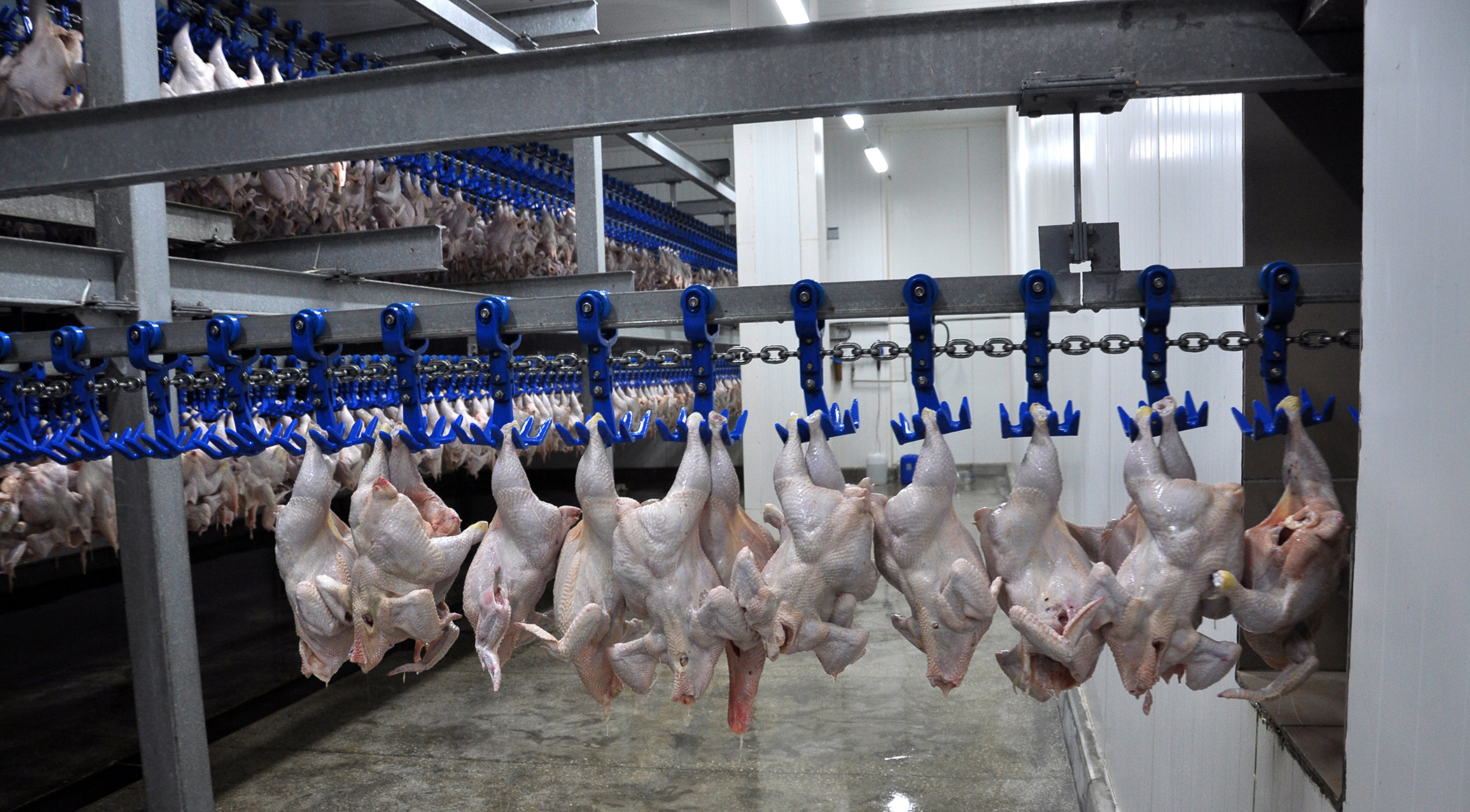
One standout customer example is Clemens Food Group, winner of Food Engineering’s 2023 Plant of the Year. The family-owned pork processing company prioritized food safety and hygiene when it selected Gray to design and build a state-of-the-art expansion for its home campus in Hatfield, PA. Fully separating raw ingredients from ready-to-eat products, such as by carefully routing the flow of materials and foot traffic, was a critical measure given the high cross-contamination risks inherent to protein processing.
Working with the Gray team, Clemens implemented advanced sanitary strategies, including automated clean-in-place (CIP) systems for safe, efficient cleaning. The investment wasn’t just about regulatory compliance; it reflected the company’s long-term values of stewardship and integrity. With another expansion underway between Gray and Clemens in 2025, both companies continue to treat hygienic design as a key strategy for success.
A Pillar for Growth
As domestic manufacturing continues to expand and become more efficient, sanitary design remains central to compliance and brand trust. In response to clear trends and abundant real-world examples of both positive and negative design-related outcomes, industry leaders will continue to treat sanitary design as an ongoing investment in operational excellence. By combining proven fundamentals like cleanability and traceability with new technologies such as sensor-driven CIP systems and advanced data reporting, food and beverage manufacturers can strengthen safety, streamline production and distribution, and reinforce their reputation and services in the marketplace.
- Category:
- Food and Beverage
Some opinions expressed in this article may be those of a contributing author and not necessarily Gray.
Related News & Insights
Food and Beverage, Design
Hygienic Design in Food Processing, Part One
Industry
Food and Beverage
Sanitary Design Best Practices for Snack and Bakery Facility Construction
Industry, Opinion
Food and Beverage, Design
Food Safety: FSMA, Hazard Analysis, & Sanitation Controls
Industry