Using Training to Lower Construction Incident Rates
How leading contractors use training and technology to build a stronger safety culture—and how Gray puts philosophy into practice.
Year after year, construction remains the most hazardous industry in the country. More workers die in construction-related incidents in the U.S. than in any other private-sector industry. The latest available data from the U.S. Bureau of Labor Statistics comes from 2024 and puts the figure at 1,034. This figure is as harrowing as it is improvable. The dangers of construction are no mystery: falls, electrocutions, being struck by equipment, and getting caught in or between objects. Nearly all such accidents are preventable with the right combination of planning, technology, knowledge, and practice. What’s challenging is accounting for these dangers every minute, every hour, every day across jobsites in every corner of the country.
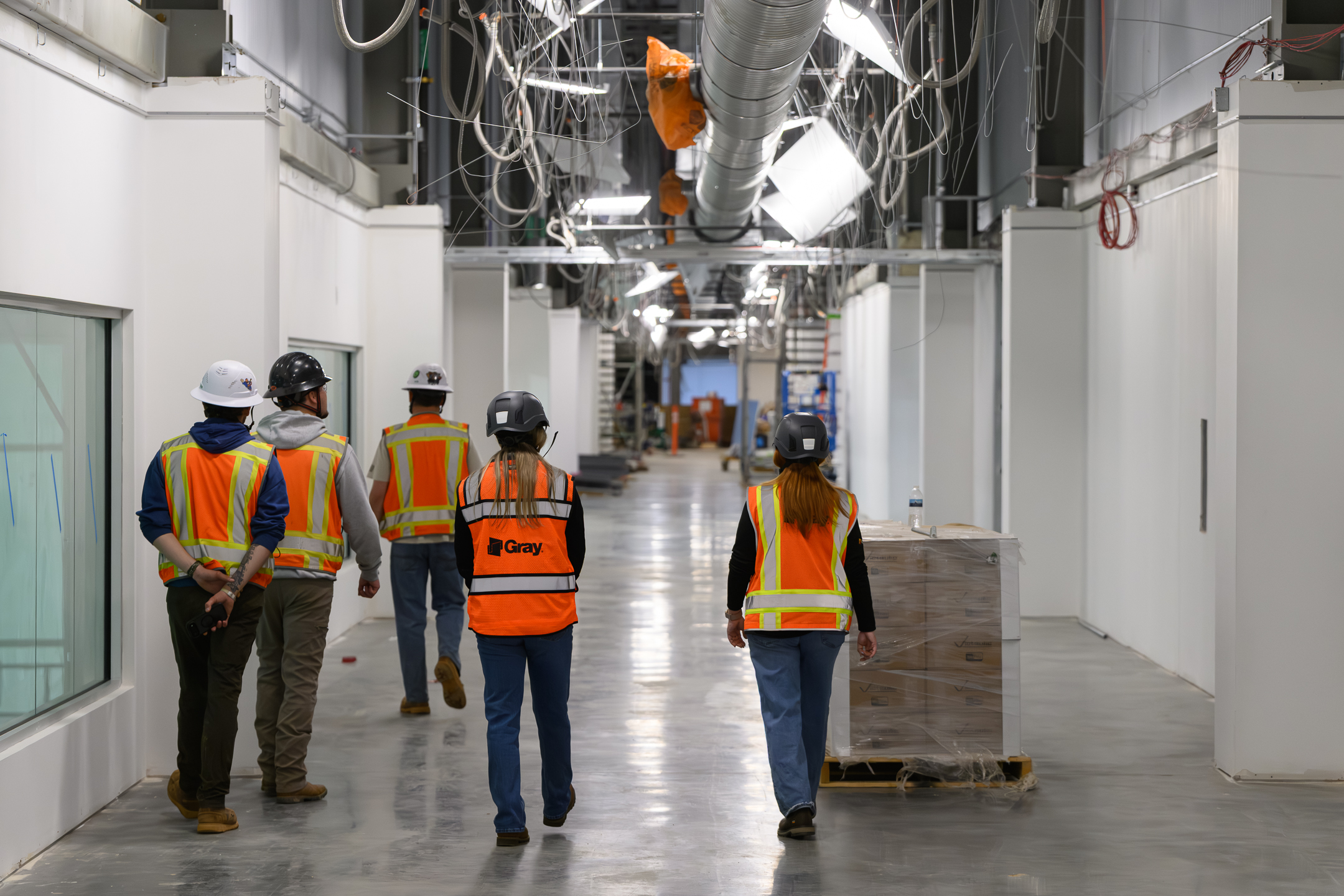
Training plays an outsized role in this effort. Across the industry, contractors that consistently post strong safety numbers share a common trait: they treat training not as a compliance checkbox exercise, but as an ongoing, reinforced discipline that reaches every person on a jobsite, from senior leaders with 30 years’ experience to interns with a single week’s and every subcontractor and site visitor in between.
Data Shows Training to be a Safe Bet
When it comes to justifying an investment in training, the numbers are good. According to the American Institute of Constructors, firms that pair safety training with modern jobsite technology “can realize a 59% reduction in injuries and accidents on job sites.” OSHA estimates that companies typically see $4 to $6 in savings for every $1 invested in an effective safety program, as fewer injuries translate into lower insurance premiums, less lost time, and fewer schedule disruptions.
Independent research reveals similarly positive results ranging from reduced claims to behavioral changes. A 9-year study of union carpenters conducted with CPWR—The Center for Construction Research and Training found that workers who completed OSHA Outreach Training filed workers’ compensation claims at consistently lower rates than untrained peers. A related CPWR survey of building-trades workers found that safe behaviors improved measurably after training: for example, the share of workers who carried tools while climbing a ladder dropped from 75% to 26%, and the share who checked that scaffolding was secure before use nearly doubled, from 37% to 79%. (Gray’s own safety manual emphasizes that ladders should be used only as a last resort and only then with a holder/spotter.)
Application of training doesn’t occur only on the jobsites. Virtual and augmented reality tools allow workers to rehearse high-risk tasks (such as working at heights) in a controlled setting. These tools transform a scenario on paper into a realistic environment where conditions must be correctly evaluated and decisions made quickly—all with no cost to worker safety if mistakes are made. Early research suggests VR-based training can lift measured safety awareness by roughly 30% compared with traditional instruction alone.
The Hallmarks of Effective Training Programs
Not every training initiative produces transformative results. Programs that do share some notable attributes:
- Leadership commitment that is visible and consistent, not confined to a poster in the breakroom
- Role-specific responsibility, so supervisors, safety professionals, and craft workers each understand their part in preventing incidents
- A realistic and relevant orientation that goes beyond a checklist, incorporating site-specific hazards, lessons learned from past incidents, and instruction in multiple languages where needed
- Frequent reinforcement through daily toolbox talks, weekly meetings, and routine site walks, rather than a single annual session
- Tools and metrics to verify success, through testing and hands-on demonstrations rather than a signature on a sign-in sheet
- Consistent and universally applied standards that extend to subcontractors and suppliers, who often make up the majority of the jobsite workforce
- Strategically deployed technology that enhances—rather than replaces—hands-on instruction, including digital pre-task plans, real-time hazard tracking, and VR/AR tools
Training in Practice at Gray
Gray’s approach to training starts before a new hire or subcontractor ever picks up a tool. Orientation is delivered in English, Spanish, German, and Korean and covers site-specific hazards, emergency procedures, and company expectations, ending with a written quiz that every new team member must pass before starting work. Field employees complete Gray’s in-house OSHA 30-hour course once every five years; office-based staff complete OSHA 10. Many of Gray’s team members exceed this OSHA requirement. Supervisors and safety representatives conduct a dedicated orientation covering their responsibilities, with a signed agreement kept on file at the jobsite.
Reinforcement continues daily. Every project holds a Plan-of-the-Day (POD) and Plan-of-the-Next-Day (POND) meeting, where trade partners flag high-risk tasks—mobile equipment, work at heights, confined space entry, lockout/tagout, and similar activities—on a shared board so every crew on site can see and plan around them. Pre-task plans (PTPs) are completed digitally through HammerTech, Gray’s safety data platform, reviewed with crews before work begins, and signed by every worker performing the task.
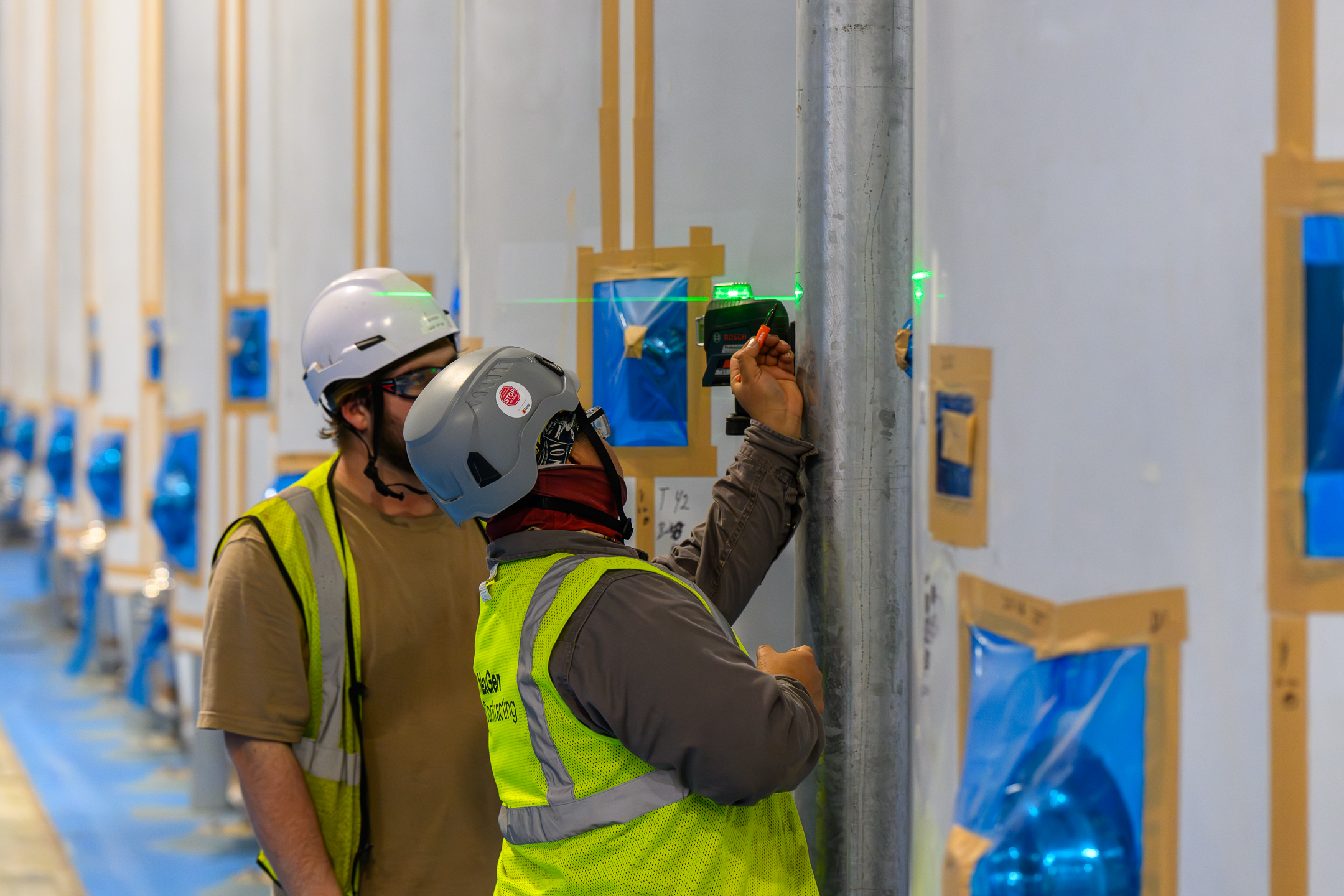
Gray applies the same standards to its trade partners. No subcontractor employee can begin work without completing Gray’s prequalification process and site orientation, and firms bringing more than 20 workers to a site must designate a safety representative holding an OSHA 30-hour card at minimum.
The results show up in the numbers. Gray’s current Recordable Incident Rate and Lost Time Incident Rate are 1.22 and 0.19, respectively, both of which sit a full point below the industry average for accident rates. Even more significant, these figures aren’t limited to Gray team members—they include trade workers and other subcontractors to more accurately reflect the effectiveness of the safety program across its jobsites.
The value of a safety program comes not from policies, but from individuals and their decision-making, and Gray’s value was recognized again earlier this year, when Jack Duvall, a senior site manager, received AGC of Kentucky’s Safety Excellence Award for superintendents.
Jack spoke of the importance of collaboration in improving a site’s safety program. “We tend to get lost in our own little world on our project, so sometimes it’s nice to take a step back,” he says. “We’ve got a lot of fires to put out, but it’s nice to go see somebody else’s job and how they’re doing it. I’ve learned over the years to bring those lessons back to my project.”
Training extends beyond the jobsite, too. Gray’s safety team gathers biennially for the Gray Safety Summit, a major outing focused on leadership development and technical instruction. The summit covers topics including fall protection, confined spaces, and other high-risk areas to sharpen focus and hone methods for those who lead Gray’s safety orientation and training programs.
An Industry-Wide Commitment
Thankfully, Gray is far from alone in recognizing training’s role in driving down incident rates. As a longtime partner in Construction Safety Week and OSHA’s Safe & Sound Week, Gray has the opportunity to share knowledge with and learn from likeminded contractors and safety professionals. Trade associations across the country now frequently build safety training requirements into their recognition programs, and firms with strong records are consistently held up as examples for others to follow. Gray’s recognition year after year as a Diamond award winner in Associated Builders & Contractors Safety Training Evaluation Process (STEP) program signifies the company’s commitment to implementing safe jobsite practices.
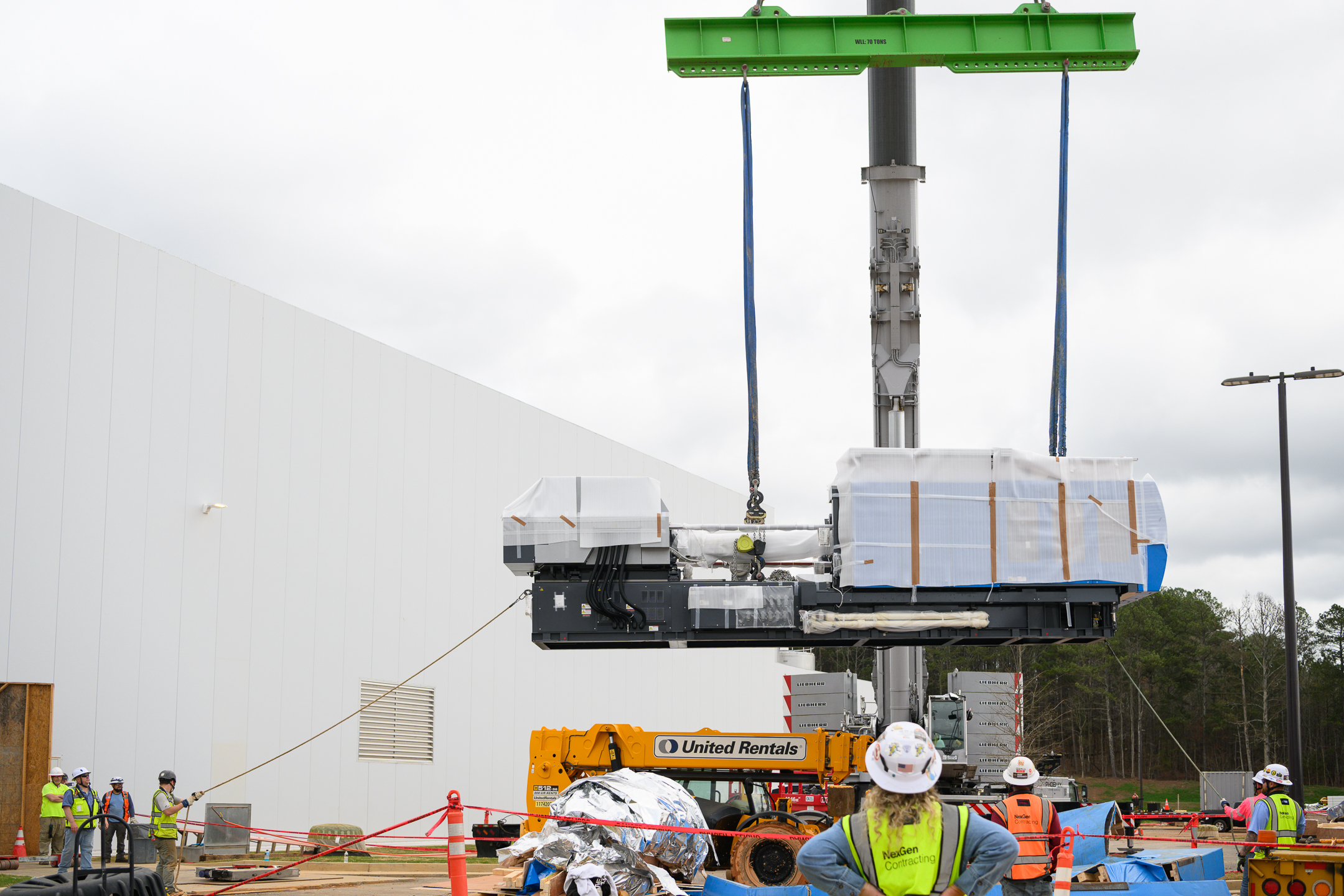
Programs like these, alongside OSHA’s outreach courses and a growing menu of VR- and AI-assisted training tools, are helping contractors turn safety training from a compliance requirement into a genuine competitive advantage, and one that helps send more workers home safely at the end of the day.
Gray’s philosophy is captured in a phrase every new hire and subcontractor hears during orientation and involves observing an unsafe condition: “if you see it, you own it; walk past it, you condone it.” It’s a simple reminder that in the private sector’s most dangerous industry, training is not a course you take or a form you complete, but a decision to take ownership, repeated by every team member, every day.
- Category:
- Industry
Related News & Insights
Construction
Strategic Use of Technology Key to Improved Construction Worker Safety
Industry
August 28, 2025Construction
Gray Goes “All In Together” for Construction Safety Week
Corporate News
May 23, 2025Gray Reinforce Safety-First Culture During Construction Safety Week 2026
Corporate News
May 11, 2026